
Published on Mar 11, 2026
IASbaba's Daily Current Affairs
DAILY CURRENT AFFAIRS IAS | UPSC Prelims and Mains Exam – 11th March 2026

Archives
(PRELIMS Focus)
PM Matsya Sampada Yojana
Category: Government Schemes
Context:
- The Union Government allocated ₹2,500 crore for the fisheries sector under the Pradhan Mantri Matsya Sampada Yojana in the Budget Estimates for 2026–27.
About PM Matsya Sampada Yojana:
-
- Nature: It is a flagship umbrella scheme for the sustainable and responsible development of India’s fisheries sector, designed to modernize the fisheries value chain and improve the socio-economic welfare of fishers and fish farmers.
- Launch: The scheme was launched on 10 September 2020.
-
- Ministry: It is implemented by the Department of Fisheries under the Ministry of Fisheries, Animal Husbandry and Dairying, Government of India.
- Duration: Originally it was launched for 5 years (FY 2020-21 to FY 2024-25), but now it is extended up to FY 2025-26.
-
- Objective: It aims to enhance fish production and productivity in a sustainable and inclusive manner. It also aims to modernize fisheries infrastructure and strengthen the value chain including post-harvest management and marketing.
- Large Investment Framework: The scheme was approved with a total investment of about ₹20,050 crore for holistic fisheries sector development.
- Two Implementation Components: It operates through Central Sector (CS) and Centrally Sponsored Scheme (CSS) components.
- Infrastructure Development: It focuses on fishing harbours, cold chain facilities, processing units, and modern fish landing centers.
- Aquaculture Promotion: It supports activities such as biofloc farming, sea cage farming, seaweed cultivation, ornamental fisheries, and pearl farming.
- Fisher Welfare Measures: It also provides financial assistance for fishing boats, gear upgrades, and support during fishing ban periods.
- Sustainable Fisheries Management: It also provides for promotion of artificial reefs, mariculture, and ecosystem restoration to replenish fish stocks.
- Capacity Building: Training programmes and skill development initiatives are also conducted for fishers and entrepreneurs.
- Significance: It strengthens India’s position as the second-largest fish producer globally, contributing nearly 8% of global fish production. It also supports millions of fishers and coastal communities through income generation and employment opportunities.
Source:
DART Mission
Category: Science and Technology
Context:
- According to new studies, DART Mission not only altered the motion of a small asteroid within its system but also changed the orbit of the entire asteroid pair around the Sun.

About DART Mission:
- Full form: DART stands for Double Asteroid Redirection Test.
-
- Nature: It was a NASA space probe dedicated to investigating and demonstrating one method of asteroid deflection by changing an asteroid’s motion in space through kinetic impact.
- Launch: It was launched on November 24, 2021.
- Uniqueness: It was the first-ever space mission to demonstrate asteroid deflection by a kinetic impactor. It was the world’s first planetary defence technology demonstration.
-
- Objective: It was aimed at finding out whether or not we could redirect the trajectory of a near-Earth object simply by crashing into it.
- Target: The target of DART was a binary asteroid system consisting of a smaller moonlet, Dimorphos, orbiting around a larger asteroid, Didymos. Because the two were linked by gravity, the theory went, knocking little Dimorphos off-kilter would affect both objects.
- Collision: DART spacecraft successfully collided with Dimorphos on 26 September 2022. Weighing in at over 1,000 pounds, the spacecraft’s collision with Dimorphos was as energetic as an explosion of over three tons of TNT.
-
- Impact: DART’s collision shortened the orbit of the asteroid by around 33 minutes. The collision also slightly altered the orbit of the Didymos system around the Sun. Researchers found that the solar orbital period changed by about 0.15 seconds.
- Significance: The mission was a success. For the first time, humans successfully demonstrated the ability to change the motion of an asteroid in space.
Source:
Exercise LAMITIYE
Category: Defence and Security
Context:
- Indian Armed Forces contingent is participating in the eleventh edition of joint military Exercise “LAMITIYE-2026” with Seychelles Defence Forces (SDF) in Seychelles.

About Exercise LAMITIYE:
- Countries involved: It is the joint military exercise conducted between India and Seychelles.
- Nomenclature: The word “LAMITIYE” means “Friendship” in Creole, the official language of Seychelles.
-
- History: The exercise has been conducted since 2001 to strengthen bilateral military relations.
- Frequency: It is a biennial event (conducted every two years).
- Nature: Traditionally a land-based military exercise, the 2026 edition is the first ever tri-service participation for the Indian Armed Forces, involving the Army, Navy, and Air Force.
- Participating troops: The contingent comprises personnel from the ASSAM Regiment and participation from Indian Navy and Indian Air Force including INS Trikand and a C-130 aircraft.
- Focus areas:
-
-
- Interoperability: Enhancing synergy and coordination in sub-conventional operations within semi-urban environments.
-
- Peacekeeping: Strengthening cooperation and interoperability during UN Peacekeeping Operations.
-
-
- Threat Neutralization: Jointly training to plan and execute tactical drills for neutralizing potential threats in complex terrains.
- SAGAR Vision: Aligns with India’s SAGAR (Security and Growth for All in the Region) doctrine, reinforcing India’s role as a net security provider in the Indian Ocean Region (IOR).
-
- About Exercise LAMITIYE 2026:
-
- This edition marks a significant milestone with the participation of all three services of the Indian Armed Forces.
- The exercise will strive to enhance synergy in the domains of Sub-conventional Operations in Semi-Urban environment and cooperation and interoperability between both the sides during Peace Keeping Operations.
- Both sides will jointly train, plan and execute a series of tactical drills for neutralisation of likely threats that may be encountered in a Semi-Urban environment, while exploiting and showcasing New Generation Equipment and technology.
- It will include Field Training Exercises, combat discussions, case studies, lectures & demonstrations, culminating with Validation Exercise.
Source:
National Highways Green Cover Index
Category: Miscellaneous
Context:
- Recently, the National Highways Authority of India (NHAI) released the first National Highways Green Cover Index (NH-GCI).

About National Highways Green Cover Index:
- Developers: It is a joint initiative by National Highways Authority of India (NHAI) and ISRO’s National Remote Sensing Centre (NRSC).
- Primary Objective: It aims to provide a scientific baseline and technology-driven assessment of green cover within the Right of Way (RoW) of National Highways.
-
- Measurement Unit: The index is expressed as a percentage, representing the proportion of land covered by green canopy within each 1 km segment.
- Assessment Cycle: The inaugural report (covering July–December 2024) analyzed approximately 30,000 km of highways across 24 states
- Satellite Data: It utilizes 5-meter resolution multispectral data from ISRO’s Resourcesat-2/2A (LISS-IV) satellites.
-
- Verification: High-resolution Cartosat-2S imagery and ground-truth observations are used for cross-verification.
- Chlorophyll Detection: High-resolution sensors detect chlorophyll content and use the Normalized Difference Vegetation Index (NDVI) to objectively measure vegetation health and presence.
- Platform: Results and interactive maps are available on the Bhuvan web GIS portal.
- Significance:
-
- Accountability: Enables ranking of highway stretches, helping to objectively measure the performance of plantation contractors.
- Targeted Greening: Helps identify areas with low vegetation for focused plantation management.
- Climate Commitments: Supports India’s goals under the Paris Agreement by creating carbon sinks and promoting biodiversity.
- Policy Support: Aligns with the Green Highways Policy, 2015, transitioning from manual monitoring to data-backed governance.
Source:
Silent Valley National Park
Category: Environment and Ecology
Context:
- Recently, a comprehensive bird survey conducted in Silent Valley National Park documented 192 bird species.
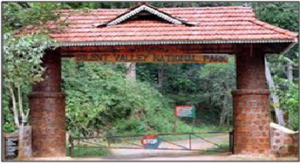
About Silent Valley National Park:
- Location: It is located along the southwest corner of the Nilgiris in South India, in the State of Kerala.
-
- Etymology: Named “Silent” by the British due to the perceived absence of cicadas, which typically create a buzzing sound in such forests
- Significance: It is one of the last undisturbed tracts of tropical rainforest in India.
- Status: It constitutes the centerpiece of the Nilgiri Biosphere Reserve, sanctified as a World Heritage Site by UNESCO in 2012.
- Altitude: The altitude of the park varies between 658 to 2383 meters.
- River: The Kunthipuzha River traverses the entire 15 km length of the park from north to south before joining the Bharathapuzha.
- Vegetation: It has four types of vegetation “West Coast tropical evergreen forest, southern sub-tropical broad-leaved hill forest, montane wet temperature forest, and grasslands.
- Flora: The flora of the valley includes about 1000 species of flowering plants, 107 species of orchids, 100 ferns and fern allies, 200 liverworts, 75 lichens, and about 200 algae. Plants of high medicinal value as well as the towering Culinea trees are also found here.
- Fauna: It is famous for its population of lion-tailed macaques, Nilgiri langur, Malabar giant squirrel, Indian elephant, tiger, leopard, and gaur (Indian bison).
- Tribes: The area is home to indigenous groups including the Irulas, Kurumbas, Mudugas, and Kattunaikkars, whose ethnic heritage is protected within the region.
Source: