

Archives
(PRELIMS Focus)
Category: Economy
Context:
- Recently, the NITI Aayog released the second annual edition of the “Fiscal Health Index 2026” in New Delhi.
About Fiscal Health Index:
-
- Launch: It was introduced by NITI Aayog.
- Coverage: It provides a systematic framework to evaluate the fiscal performance of 18 major Indian states, 10 North-Eastern and Himalayan states.
-
- Framework: The Index has been designed as a data-driven framework to evaluate fiscal soundness, guide reforms, and promote evidence-based fiscal policymaking across states.
- Pillars of Assessment: The index is built on five key sub-indices:
-
-
- Quality of Expenditure: Ratio of developmental spending (asset creation) vs. non-developmental routine operations.
- Revenue Mobilisation: Ability to generate own tax and non-tax revenue independently.
- Fiscal Prudence: Adherence to FRBM Act targets and deficit management.
- Debt Index: Total debt burden relative to economic size and interest payment liabilities.
- Debt Sustainability: Capacity to service current debt based on GSDP growth.
-
- Classification: The index classifies states into four tiers.
-
-
- Achievers: These are states with strong fiscal discipline, high own-tax revenues, low deficits, and manageable debt;
- Front Runners: These states maintain broadly sound finances but fall short of the top tier on one or more indicators;
- Performers: They occupy the middle ground, with mixed results across the five pillars.
- Aspirational: These states are those facing the most significant fiscal stress, characterised by persistent deficits, high debt, and limited revenue capacity.
-
- Key Highlights of Fiscal Health Index (FHI) 2026:
-
- Top Major State: Odisha retained its number one position, excelling in debt sustainability and non-tax revenue mobilization (e.g., mining premiums).
- North-Eastern & Himalayan Leader: Arunachal Pradesh topped this category, followed by Uttarakhand and Tripura.
- Fiscal Concerns: Laggard states like Punjab and West Bengal were flagged for high committed expenditures (salaries, pensions, interest) and low capital outlay (roughly 10% vs. 27% in top states).
Source:
Category: Science and Technology
Context:
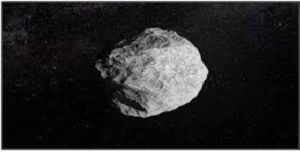
- Recently, NASA has officially ruled out the possibility of asteroid 2024 YR4 asteroid 2024 YR4 colliding with the moon in 2032.
About Asteroid 2024 YR4:
-
- Discovery: It was first detected on 27 December 2024 by the Asteroid Terrestrial-impact Last Alert System (ATLAS) telescope in Chile.
- Nomenclature: The Y in the asteroid’s name indicates that it was discovered in the last half of December. The R4 indicates that it was the 117th asteroid found in that period.
- Classification: It is an Apollo-class asteroid, meaning its orbit crosses Earth’s path but spends most of its time further from the Sun.
- Size: Revised observations from the James Webb Space Telescope (JWST) in 2025 and 2026 estimated its diameter to be between 53 and 67 metres (roughly 15–20 storeys high).
- Torino Scale Rating: In early 2025, it reached a Level 3 rating, the highest for any asteroid since 2004, indicating a moderate risk of “localized destruction”. It was later downgraded to Level 0 (no hazard) as more data became available.
- Energy Potential: If it were to impact, it could release 8 to 10 megatons of energy—roughly 340 times the power of the Hiroshima bomb.
- Origin: The study reveals YR4 is a solid, stony type that likely originated from an asteroid family in the central Main Belt between Mars and Jupiter.
- Orbital period: It has an orbital period of 4.011 years, or 1,468 days.
- Rotation speed: The asteroid’s rotation period is 19.46 minutes.
- Type: It is most likely an S-type asteroid, which means that it is probably made up primarily of silicates and nickel-iron.
- Significance: It reinforces the relevance of missions like NASA’s DART (Double Asteroid Redirection Test), which proved that kinetic impactors can successfully deflect such threats.
Source:
Category: History and Culture
Context:
- The South-Central Railway (SCR) will operate Amrut Bharat Express connecting Assam and two Telugu States facilitating devotees to visit Maa Kamakhya temple in Assam.

About Kamakhya Temple:
- Location: It is situated on Nilachal Hill and adjoins the southern bank of the Brahmaputra River in Guwahati, Assam.
-
- Goddess: The temple is dedicated to Goddess Sati, an incarnation of Goddess Durga and the consort of Lord Shiva.
- Significance: It is one of the most revered centres of Tantric practices.
- Uniqueness: It is regarded as one of the oldest of the 51 Shakti Peethas in India.
-
- History: The former temple was destroyed by Kala Pahar, which was later reconstructed in 1565 by Chilarai, who was the reigning king of the Koch dynasty.
- Literary Mentions: The temple is featured in the Kalika Purana and the Yogini Tantra, which provide detailed accounts of its spiritual importance.
- Fair: Ambubachi Mela is one of the major festivals of this temple. The festival is held every year to commemorate the yearly menstruation of Goddess Kamakhya. It is often called the “Mahakumbh of the East”.
- Architecture: It had been modelled out of a combination of two different styles, namely, the traditional Nagara, or North Indian, and Saracenic, or Mughal style of architecture. This unusual combination has been named the Nilachala Style of Architecture.
- Structural style: It has a unique structural style that is shaped in the form of a beehive surrounded by different sculptures of different gods.
- Temple plan: This is the only temple of Assam having a fully developed ground plan. It consists of five chambers, garbhagriha or sanctuary, antarala or vestibule, Jagan Mohan or principal chamber, bhogmandir or ritual chamber and natmandir or opera hall for performing traditional dance and music associated with sukti temples.
Source:
Category: Environment and Ecology
Context:
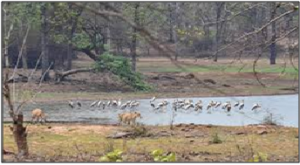
- Nauradehi wildlife sanctuary, spanning over three districts of Madhya Pradesh, will receive cheetahs in two months.
About Nauradehi Wildlife Sanctuary:
- Location: It is located in the state of Madhya Pradesh.
- Area: It is spread over an area of 1187 sq.km.
- Uniqueness: It is the largest wildlife sanctuary in Madhya Pradesh.
- Ecological corridor: Situated on a plateau in the upper Vindhyan range, it serves as an important ecological corridor connecting Panna, Satpura, and Bandhavgarh Tiger Reserves.
- Biogeographic region: It is classified under the Deccan peninsula biogeographic region.
-
- Drainage: Three-fourths of Nauradehi Wildlife Sanctuary falls in the Yamuna [Ganges] basin, and one-fourth of the sanctuary falls in the Narmada basin. The north-flowing Kopra River, Bamner River, and Bearma River, which are tributaries of the Ken River, are the major rivers of this sanctuary.
- Vegetation: It is rich with lush green vegetation, small grasslands, and dense tropical dry and mixed deciduous forests.
- Flora: These include Teak, Saja, Dhaora, Bhirra, Ber, Bel, Mahua, Tendu, Gunja, Amla, etc. Teak dominates the forested region.
- Fauna: It supports diverse wildlife, including Indian wolves, Bengal tigers, leopards, sloth bears, sambar deer, nilgai, chinkara, and various bird species.
- Significance: It has been selected for the Cheetah reintroduction Project in India.
Source:
Category: Geography
Context:
- The Kashmir Valley is witnessing one of its most unusual early springs in decades, with the river Jhelum, its lifeline, dropping below the zero-gauge level.
About Jhelum River:
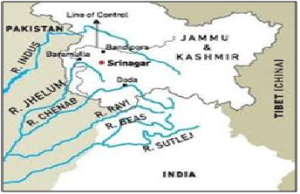
- Origin: The river originates from the Verinag Spring at the foot of the Pir Panjal Range in the Anantnag district of the Kashmir Valley.
-
- Other names: The river is also known as Vitasta in Sanskrit, Hydaspes in Greek, and Bidasp in Persian.
- Course: It flows northwest through Srinagar and passes through Wular Lake, which acts as a natural regulator. It then carves deep, narrow gorges through the Pir Panjal mountains before entering Pakistan-administered territory.
- Length: It is approximately 725 km in length.
- Confluence: It merges with the Chenab River at Trimmu in Pakistan.
- Meandering: Uniquely, the Jhelum exhibits meandering even in its youthful stage in the Kashmir Valley, a classic example of fluvial rejuvenation often asked about in UPSC Geography
- Significance: It is the lifeline of Kashmir, the region where it flows for most of its course.
- Hydrology: The hydrology of the Jhelum River is largely controlled by snowmelt from the Karakoram and Himalaya ranges in the spring and the southwest monsoon on the Indian subcontinent that brings heavy rains from June to September.
- Major Tributaries: The largest tributary of the Jhelum is the Kishenganga (Neelum) River, which joins near Muzaffarabad and enters the Punjab province, Pakistan. Other tributaries include the Kunhar River. Sandran River, Bringi River, Arapath River, Watlara River, Lidder River, and Veshaw River.
Source:
(MAINS Focus)
Subject: General Studies-II (International Relations)
Sub-topic: India’s Foreign Policy, West Asia, Strategic Autonomy, Energy Security
Introduction
West Asia is once again engulfed in a major conflict, with Israel, the U.S., and Iran now engaged in direct hostilities. For India, this is not a distant geopolitical tremor but a proximate crisis with profound implications. The region is central to India’s energy security, hosts over nine million Indian citizens, and is critical to connectivity initiatives like the India-Middle East-Europe Economic Corridor (IMEC).
In this volatile landscape, India’s response—marked by Prime Minister Modi’s visit to Israel on the eve of strikes, silence on the killing of Iranian leadership, and a seemingly detached diplomatic posture—has raised fundamental questions about the trajectory of its West Asia policy and the delicate balance between its growing partnership with the U.S., Israel, and its traditional ties with Iran and the Arab world.
India’s Stakes in West Asia: Why the Crisis Matters
India’s vital national interests in the region are multifaceted and deeply entrenched.
- Energy Security: West Asia remains India’s primary source of hydrocarbon imports. Any escalation risks supply disruptions and price volatility, directly impacting the Indian economy and inflationary pressures.
- Welfare of the Indian Diaspora: Over 9 million Indians live and work in the Gulf region, forming a crucial source of remittances. Their safety and livelihood are directly threatened by escalating conflict.
- Strategic Connectivity: Ambitious projects like the India-Middle East-Europe Economic Corridor (IMEC), envisioned as a counter to China’s Belt and Road Initiative, are now stalled. The instability has pushed such long-term economic cooperation to the “back burner,” as noted by experts.
The Debate: Strategic Autonomy vs. Apparent Alignment
The core question raised is whether India’s actions signal a shift from its principled position of non-alignment to a tacit alignment with the U.S.-Israel axis.
- Signals of Affiliation:
- PM Modi’s Israel Visit: The timing of the visit, just before joint U.S.-Israeli strikes on Iran, sent a powerful political signal. His warm engagement with Prime Minister Netanyahu, dating back to their 2017 exchange, suggests a deepening bilateral comfort that some analysts argue compromised India’s perceived neutrality.
- Silence on Iranian Sovereignty: India’s failure to use terms like “protection of sovereignty” or condemn the killing of Iranian leaders, including Ayatollah Ali Khamenei, marks a stark departure from its historical position of supporting territorial integrity and is perplexing given India’s strategic interest in Iran (Chabahar, Afghanistan, connectivity to Central Asia).
- Counter-Argument: The Israel Factor
- Proponents of the approach argue that the relationship with Israel is no longer just emotional but deeply strategic. Israel is a top-tier supplier of defence technology, intelligence, and security-related equipment. This partnership, built over decades, cannot be easily sidelined.
The Evolving Role of Gulf States and the U.S. Factor
India’s policy must also navigate the complex and shifting positions of other key actors in the region.
- Gulf States’ Dilemma: Countries like Saudi Arabia and the UAE are currently adopting a purely defensive posture—intercepting threats but avoiding offensive action against Iran. However, this stance is unsustainable if the conflict prolongs, exposing cracks in their air defence and forcing a potentially damaging choice between Tehran and Tel Aviv-Washington.
- The Trump Factor: The return of Donald Trump as U.S. President introduces significant unpredictability. His administration’s “maximum pressure” campaign and perceived manipulation by Israeli leadership complicate India’s calculations.
The Cost of Detachment: A Policy in Need of Recalibration
The discussion suggests that India’s current approach—described as “detached” and “muddled”—carries significant risks.
- Missed Opportunity for Diplomacy: India, as a voice of the Global South and a stakeholder in regional peace, could have played a central role in urging restraint. However, its response has been half-hearted, with limited high-level engagement with collective Arab platforms like the Arab League or GCC on this specific crisis.
- Erosion of Traditional Trust: The silence on Iran and the warmth towards Israel at a moment of conflict risks eroding the trust built with Tehran over decades, potentially jeopardizing the Chabahar port project and cooperation on Afghanistan.
- Absence of a Collective Vision: India appears to lack a coherent, collective vision with regional partners on security architecture, leaving it reactive rather than proactive in a theatre of vital national interest.
Conclusion
India’s West Asia policy is at a critical juncture. The current crisis has exposed the tensions between its deepening strategic partnership with the U.S. and Israel and its enduring interests in Iran and the Arab world. Strategic ambiguity, once a tool to keep options open, now risks being perceived as a one-sided drift.
To safeguard its energy security, its diaspora, and its long-term connectivity goals, India must urgently recalibrate. It needs to move beyond a transactional approach and deploy its considerable diplomatic capital to advocate for ceasefire, restraint, and the protection of sovereignty.
UPSC Mains Practice Question
- “India’s approach to the ongoing West Asia crisis reveals the growing tension between its policy of ‘strategic autonomy’ and its deepening strategic partnerships.” Critically analyze India’s response to the Israel-U.S.-Iran conflict in the context of its vital national interests in the region.
Subject: General Studies-III (Economy, Science & Technology)
Sub-topic: Research & Development, Innovation Ecosystem, Private Sector Participation
Introduction
India presents a striking paradox in its innovation landscape. On one hand, government intent is clearer than ever—manifested in the ₹1,00,000 crore RDI Fund, a ₹20,000 crore corpus for deep-tech startups, the liberalization of atomic energy patenting, and a rise to 38th rank in the Global Innovation Index 2025.
Patent filings have nearly doubled to over 1,10,000 in 2024-25. On the other hand, the fundamentals tell a sobering story: R&D intensity languishes at just 0.65% of GDP, global technological influence remains marginal, and the translation of research into marketable products is weak.
The Intent-Execution Paradox: Policy Momentum vs. Ground Realities
The government has demonstrated unprecedented ambition in fostering innovation.
- Major Policy Initiatives:
- RDI Fund: ₹1,00,000 crore corpus announced to boost research, development, and innovation.
- Deep-Tech Push: ₹20,000 crore corpus for deep-tech startups announced in the 2026 Union Budget.
- Atal Tinkering Labs: Near six-fold increase in funding (from ₹500 crore to ₹3,200 crore) to nurture future innovators.
- Patent Liberalization: The SHANTI Act, 2025 now allows patents for peaceful uses of nuclear energy, opening doors for private sector participation in the atomic energy sector.
- The Execution Gap: Despite these measures, India’s R&D intensity (0.65% of GDP) remains the lowest among BRICS nations except South Africa, and far behind innovation leaders like South Korea (4.8%), Israel (5.4%), and the U.S. (3.5%). This reveals a systemic failure to translate policy intent into outcomes.
The Private Sector’s Reluctance: The Core of the Problem
In all innovation-leading economies, industry drives the majority of R&D spending. India is an exception.
- State vs. Industry Led R&D: In India, the state still bears a disproportionate share of R&D expenditure. The private sector’s appetite for long-term, high-risk, capital-intensive innovation remains limited.
- Patent Quality over Quantity: While domestic patent filings now constitute 62% of the total (up from under 59,000 in 2020-21 to over 1,10,000 in 2024-25), this growth is recent and policy-driven. The underlying innovation base remains shallow.
- International Comparison: India filed only 4,547 Patent Cooperation Treaty (PCT) applications in 2024, compared to China (over 70,000), the U.S. (over 54,000), and Japan (over 48,000). Even Switzerland filed over 5,300, underscoring that scale, not just growth rate, determines global technological influence.
Human Capital Deficits: The Talent and Inclusion Gap
Innovation is ultimately a function of human capital. Here, India’s rankings reveal deep vulnerabilities.
- Researcher Crunch: India ranks 80th globally in the number of full-time equivalent researchers per capita.
- Knowledge-Intensive Employment: Ranked 95th in employment in knowledge-intensive sectors, indicating that highly skilled talent is not being absorbed into productive, innovation-driven roles.
- Gender Diversity Deficit: India ranks 101st among 119 economies in the employment of women with advanced degrees. This is a critical weakness, given the strong empirical correlation between workforce diversity and innovation outcomes.
- Government Response: Initiatives like WIDUSHI (Women’s Instinct for Developing and Ushering in Scientific Heights and Innovations) and WISE-KIRAN aim to improve women’s participation in science, but their impact remains to be seen.
The Missing Bridge: From Lab to Market
Innovation reaches its full impact only when research is successfully commercialized. This translation remains India’s weakest link.
- Weak Academia-Industry Linkages: While universities and public research institutions generate scientific output, mechanisms for technology transfer, venture creation, and risk-capital alignment are underdeveloped.
- Absence of Patient Capital: High-technology entrepreneurship requires funding that tolerates long gestation periods and high failure rates. India’s venture capital ecosystem often prioritizes scalable business models over deep-tech innovation.
Conclusion
India’s innovation story has moved from an era of policy neglect to one of policy intent. The government has laid the tracks with increased funding, regulatory liberalization, and institutional initiatives. However, the train will not move without the engine of private sector commitment. The challenge is no longer one of government intent but of industry execution.
To achieve a true innovation-led economy, India’s private sector must embrace long-term, high-risk R&D, invest in deepening human capital, and build robust bridges between the laboratory and the market. The green shoots in the commercial space sector and deep-tech startups are encouraging, but they must scale into a forest of globally competitive, R&D-driven enterprises.
UPSC Mains Practice Question
- “India’s innovation challenge is no longer one of government intent but of industry execution.” Critically analyze the structural constraints in India’s R&D ecosystem, with a special focus on the role of the private sector in bridging the gap between research and commercialization.