

Archives
(PRELIMS Focus)
Category: Government Schemes
Context:
- Recently, Prime Minister Narendra Modi approved the launch of the PM RAHAT (Road Accident Victim Hospitalisation and Assured Treatment) Scheme.

About PM RAHAT Scheme:
-
- Full form: It stands for PM RAHAT (Road Accident Victim Hospitalisation and Assured Treatment) Scheme.
- Nature: It has prioritized life-saving intervention, financial certainty for hospitals, and a structured emergency response system for accident victims.
- Objective: It aims to reduce mortality by ensuring treatment during the “Golden Hour” (the first hour after an accident), which can prevent nearly 50% of road accident deaths.
- Nodal ministries: It is a collaborative effort between the Ministry of Road Transport and Highways (MoRTH) and the Ministry of Health and Family Welfare (MoHFW).
-
- Coverage period: Treatment is covered for a maximum of 7 days from the date of the accident.
- Stabilization: It includes stabilization treatment for 24 hours in non-life-threatening cases and up to 48 hours in life-threatening cases.
-
- Incentive: To encourage “Good Samaritans” (now termed Rahveers), the government provides a cash reward of ₹25,000 and a certificate for those who transport victims to hospitals.
- Integration: It will be integrated with the Emergency Response Support System (ERSS) enabling victims, Good Samaritans to dial 112 to locate the nearest designated hospital and request ambulance assistance.
- Cashless treatment: Under the Scheme, every eligible road accident victim on any category of road will be entitled to cashless treatment up to ₹1.5 lakh per victim.
- Implementation: It is implemented through amalgamating the Electronic Detailed Accident Report (eDAR) platform of the Ministry of Road Transport and Highways with the Transaction Management System (TMS 2.0) of the National Health Authority.
- Reimbursement: The reimbursement to the hospitals will be made through the Motor Vehicle Accident Fund (MVAF), established under the Motor Vehicles (Amendment) Act, 2019.
- Insured and uninsured vehicles: In cases where the offending vehicle is insured, payment will be drawn from contributions made by General Insurance Companies. In uninsured and Hit & Run cases, payment will be made through budgetary allocation by the Government of India.
- Grievance redressal: Grievances will be addressed by a Grievance Redressal Officer nominated by the District Road Safety Committee chaired by the District Collector or District Magistrate.
Source:
Category: Environment and Ecology
Context:
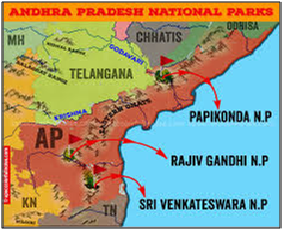
- The adult male tiger, named ‘Explorer’, was reintroduced into the wild in the Papikonda National Park (PNP) in Andhra Pradesh as part of Operation Stripes.
About Papikonda National Park:
- Location: It is located in the East Godavari and West Godavari Districts of Andhra Pradesh.
- Area: It is the largest national park in Andhra Pradesh, spanning approximately 1,012.86 sq km.
- Establishment: Initially declared a reserved forest in 1882 and a wildlife sanctuary in 1978, it was upgraded to a National Park in 2008.
-
- Associated river: Situated in the northern Eastern Ghats, it is bisected by the Godavari river, which cuts through the Papikonda hill range, creating a rugged landscape of steep slopes and deep valleys.
- Terrain: It encompasses a rugged landscape with steep slopes, hills, and deep valleys.
- Mountains: There are 62 named mountains in the park. Devara Konda is the highest point. The most prominent mountain is Verala Konda.
- Significance: It has been recognized as an Important Bird and Biodiversity Area (IBA) by BirdLife International.
- Vegetation: The park is characterized by tropical, moist deciduous forests mixed with patches of semi-evergreen and dry deciduous forests.
- Flora: The park is home to several types of trees, including teak, rosewood, sandalwood, bamboo, eucalyptus, sal, mahua, pterocarpus, terminalia, and cassia.
- Fauna: These include Bengal tiger, Indian leopard, sloth bear, and Indian wild dog (dhole), gaur (Indian bison), sambar deer, spotted deer (chital), mouse deer, barking deer, four-horned antelope, and Indian giant squirrel.
- Uniqueness: A unique dwarf breed of goat known locally as the “kanchu mekha” originates in this region.
- Tribes: It is primarily inhabited by the Konda Reddi and Koya tribes, who are recognized as Particularly Vulnerable Tribal Groups (PVTGs).
- Concern: The ongoing construction of the Polavaram multi-purpose irrigation project on the Godavari River poses a significant threat, as the reservoir’s backwaters are expected to submerge parts of the park and displace several tribal villages.
Source:
Category: History and culture
Context:
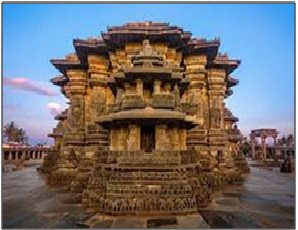
- The Prime Minister’s new office complex, Seva Teerth has been built in the Indian architectural tradition inspired by the features of the Chennakeshava Temple.
About Chennakeshava Temple:
- Location: The Chennakeshava Temple is a 12th-century temple, situated on the banks of the Yagachi River in Belur (ancient Velapura), Hassan district, Karnataka.
- Other names: It is also referred to as the Keshava, or Vijayanarayana Temple of Belur.
-
- Deity: It is dedicated to Lord Vishnu as Chennakeshava (meaning “Handsome Keshava”).
- Commissioning: It was commissioned by King Vishnuvardhana in 1117 CE (after a major military victory in 1116 CE over the Cholas in the great battle of Talakkad), on the banks of the Yagachi River in Belur, also known as Velapura.
- Construction: The temple was built over three generations and took 103 years to complete.
- Significance: The temple is listed as a UNESCO World Heritage Site.
-
- Architecture type: It is a stunning example of Hoysala architecture.
- Material: It is built using Soapstone (Chlorite Schist), which is soft when quarried and hardens over time, allowing for extremely intricate carvings.
- Stellate plan: The temple is built on a raised platform called a Jagati that follows a star-shaped layout, providing more exterior surface area for sculptures.
- Intricate carvings: The exterior walls feature horizontal friezes depicting elephants (strength), lions (courage), horses (speed), and mythological scenes from the Ramayana, Mahabharata, and Puranas.
-
- Madanikas/Salabhanjikas: It is famous for 42 bracket figures portraying graceful women in various poses (e.g., Darpana Sundari or “Lady with a Mirror”), which are hallmarks of Hoysala art.
- Pillars: It features unique lathe-turned pillars that are highly polished and intricately decorated
- Stepped well: One of the unique features of the Chennakeshava Temple is the stepped well, which is located in the temple complex.
Source:
Category: Economy
Context:
- Recently, the Union Cabinet chaired by the Prime Minister of India approved the establishment of the Startup India Fund of Funds 2.0 (Startup India FoF 2.0).
About Startup India Fund of Funds 2.0:
-
- Nature: It is launched under the Startup India initiative. Building on the foundation laid by the original 2016 scheme, FFS 2.0 introduces a targeted, segmented approach.
- Objective: It is designed to accelerate the next phase of India’s startup journey by mobilising long-term domestic capital, strengthening the venture capital ecosystem, and supporting innovation-led entrepreneurship across the country.
- Monitoring Agency: It is monitored by Department for Promotion of Industry and Internal Trade (DPIIT), Ministry of Commerce & Industry and it is operated by Small Industries Development Bank of India (SIDBI).
-
- Investment model: It is a “Fund of Funds,” meaning it does not invest directly in startups. Instead, it contributes to the corpus of SEBI-registered Alternative Investment Funds (AIFs), which then invest in startups.
- Multiplier Effect: Supported AIFs are required to invest at least twice the amount of the FFS contribution into startups.
- Financial outlay: A total corpus of Rs. 10,000 crores for the purpose of mobilizing venture capital for the startup ecosystem of the country.
- Innovative manufacturing: It prioritises breakthroughs in high-tech areas that require patient, long-term capital.
- Empowering early-growth stage founders: It provides a safety net for new and innovative ideas, reducing early-stage failures caused by lack of funding.
- National reach: It encourages investment beyond major metros so that innovation thrives in every corner of the country.
- Address high‑risk capital gaps: It directs greater capital to priority areas which are important for self-reliance and boosting economic growth.
- Boosts investment landscape: It strengthens India’s domestic venture capital base, particularly smaller funds to further boost the domestic investment landscape.
Source:
Category: Defence and Security
Context:
- Recently, the Defence Ministry signed a contract with Hindustan Aeronautics Limited, Transport Aircraft Division, Kanpur, for the acquisition of eight Dornier 228 Aircraft.

About Dornier 228 Aircraft:
-
- Nature: It is a highly versatile multi-purpose light transport aircraft.
- Objective: It has been developed specifically to meet the manifold requirements of utility and commuter transport, third level services and air-taxi operations, coast guard duties and maritime surveillance.
-
- Manufacturing: Originally developed by Dornier GmbH (Germany); it is now license-produced in India by Hindustan Aeronautics Limited (HAL) at its Kanpur facility.
- Engine: It is powered by a pair of Garrett TPE331 turboprop engines and has a supercritical wing that generates large amounts of lift at slow speeds.
- Special capability: It possesses Short Take-Off and Landing (STOL) capabilities, allowing it to operate from short, semi-prepared, or grass runways in “hot and high” environments.
- Capacity: It is typically configured to carry up to 19 passengers or equivalent cargo
- Specialisation: The STOL capabilities allows it to operate from unprepared, unpaved, and grass surfaces and specialize in hot and high environments.
- Design: It has the unique design of the TNT wing, capable of generating large amounts of lift at slow speeds.
- Reliability: It is typically promoted for its versatility, low operational costs, and high levels of dispatch reliability.
Source:
(MAINS Focus)
(GS Paper II – Role of Civil Services in a Democracy; Government Policies & Interventions; GS Paper III – Science & Technology- Developments and their Applications in Governance)
Context (Introduction)
India’s post-Independence administrative framework was designed around a generalist civil service model suited for nation-building and territorial integration. Over the decades, however, governance has become increasingly shaped by complex scientific, technological, environmental, and public health challenges. Despite the growing centrality of science in policymaking, India lacks a dedicated scientific cadre with institutional safeguards and tailored service rules.
Scientists within government continue to operate under the Central Civil Services (Conduct) Rules, 1964, originally designed for administrative governance, creating a structural mismatch between scientific inquiry and bureaucratic norms.
The Structural Mismatch: Administrator vs Scientist
- Different Professional Pathways: Civil servants are recruited through a generalist competitive examination and trained for governance roles, whereas scientists undergo specialised education, peer review, and domain-specific expertise development.
- Absence of Tailored Career Frameworks: Unlike administrators, scientists often lack structured training, career progression pathways, and clearly aligned institutional authority within governance systems.
- Reactive Role of Science: Scientific inputs are frequently commissioned for immediate regulatory or legal needs, rather than embedded as continuous policy guidance.
- Limited Institutional Authority: Government scientists often function in advisory capacities without formal weight in final decision-making processes.
- Governance Complexity Expansion: Sectors such as climate change, oceans, nuclear safety, AI, biotechnology, and disaster management demand sustained scientific integration into policy design.
Why Administrative Rules Are Not Neutral
- Service Rules Shape Institutional Culture: Conduct rules emphasising discipline and neutrality may constrain the questioning ethos central to scientific inquiry.
- Scientific Integrity Requires Transparency: Effective science-based governance demands the ability to formally record uncertainties, risks, and dissenting assessments.
- Risk of Symbolic Consultation: Without structural safeguards, scientific advice may become decorative rather than determinative.
- Need for Professional Autonomy: Scientists must be able to flag ecological or technological risks without fear of institutional reprisal.
- Science vs Policy Distinction: Final decisions rest with elected authorities, but scientific advice must remain independent and documented.
Comparative International Experience
- Dedicated Scientific Cadres: Countries such as France, Germany, Japan, the UK, and the US maintain structured scientific services within government.
- Scientific Integrity Policies: The US framework protects scientists from political interference and mandates transparency in documentation.
- Institutionalised Evidence Use: Advanced economies embed scientists directly in ministries and regulatory agencies.
- Professional Safeguards: Separate service rules protect career progression and research independence.
- Policy Credibility Enhancement: Transparent scientific input strengthens public trust and regulatory legitimacy.
The Case for an Indian Scientific Service (ISS)
- Permanent All-India Scientific Cadre: The ISS could function alongside existing civil services, ensuring integrated scientific participation in governance.
- Rigorous Recruitment Model: Selection through peer evaluation and national-level assessment tailored to scientific expertise.
- Separate Service Rules: Dedicated scientific conduct and appraisal frameworks protecting professional independence.
- Transparent Documentation: Mandatory recording of scientific assessments and risk evaluations within institutional processes.
- Complementary Governance Model: Administrators ensure coordination and execution, while scientists provide evidence-based foresight and risk analysis.
Proposed Structural Framework
- Indian Environmental and Ecological Service: Focused on biodiversity, ecosystems, and environmental regulation.
- Indian Climate and Atmospheric Service: Dedicated to climate modelling, mitigation, and adaptation policy integration.
- Indian Water and Hydrological Service: Addressing river basin governance, groundwater, and water security.
- Indian Public Health and Biomedical Service: Integrating epidemiology and biomedical research into health governance.
- Indian Disaster Risk and Resilience Service: Embedding scientific risk modelling into disaster preparedness frameworks.
Conclusion
India has built strong scientific institutions, but institutional design has not kept pace with governance complexity. As India aspires to global leadership in climate action, technology, and public health, evidence-based policymaking must move from episodic consultation to structural integration. The creation of an Indian Scientific Service would represent a forward-looking reform that strengthens governance resilience, enhances scientific integrity, and aligns administrative systems with 21st-century challenges.
Mains Question
- Examine how the creation of an Indian Scientific Service (ISS) could strengthen evidence-based policymaking and democratic accountability. (250 words)
Source: The Hindu
(GS Paper III – Environment and Ecology; Conservation; Climate Change; Environmental Pollution and Degradation)
Context (Introduction)
The U.S. Environmental Protection Agency’s (EPA) revocation of the 2009 ‘endangerment finding’ under President Donald Trump marks a major reversal in American climate governance. The original finding, rooted in the U.S. Supreme Court judgment in Massachusetts vs EPA (2007), classified greenhouse gases (GHGs) as “air pollutants” under the Clean Air Act and required the EPA to regulate them if found harmful to public health and welfare.
In 2009, the EPA concluded that six GHGs, including carbon dioxide and methane, posed such a threat, relying heavily on IPCC assessments and U.S. scientific bodies. This legal foundation enabled federal fuel economy and GHG standards for vehicles from 2012 onward, accelerating a structural shift in the global automobile industry toward fuel efficiency, hybridisation, and electric vehicles (EVs).
The rollback attempts to dilute or dismantle these regulatory standards.
Significance of the ‘Endangerment Finding’
- Legal Basis for Climate Regulation: It empowered the EPA to regulate emissions from the transportation sector under the Clean Air Act.
- Trigger for Federal Vehicle Standards: It led to GHG and fuel efficiency norms for cars and light trucks (2012–2025).
- Technological Transformation: Manufacturers invested in hybrid systems, lightweight materials, and electric vehicle technologies.
- Global Market Influence: Regulatory credit systems benefited firms such as Tesla and shaped EV markets worldwide, including in India.
- Signal Effect in Climate Governance: It reinforced science-based policymaking aligned with international climate commitments.
Implications of the Rollback
- Weakening of Climate Accountability: Revocation undermines the scientific recognition of GHGs as threats to public health and welfare.
- Short-Term Political Signalling: The move aligns with narratives of reviving fossil fuel industries and traditional auto manufacturing.
- Limited Industrial Reversal: Global production lines are already optimised around electrification and emissions control.
- Geopolitical Realities: China’s dominance in EV supply chains limits the feasibility of reverting to fossil fuel-intensive models.
- Global Regulatory Uncertainty: It may embolden climate scepticism or regulatory dilution in other jurisdictions.
Why a Return to the ‘Gas-Guzzler’ Era Is Unlikely
- Structural Investment Lock-in: Automakers have invested heavily in EV and hybrid platforms over multi-decadal horizons.
- Export-Oriented Strategy: Major markets such as the EU continue to tighten emission norms, shaping global production strategies.
- Technological Path Dependency: Battery supply chains, charging infrastructure, and emission standards create irreversible momentum.
- Consumer Preferences Shift: Growing climate awareness and urban pollution concerns favour cleaner vehicles.
- Global Climate Commitments: International agreements and carbon pricing mechanisms reinforce decarbonisation trends.
Risks for India
- Regulatory Spillover: Indian automakers may cite U.S. dilution as a pretext to weaken domestic fuel efficiency norms.
- Policy Inconsistency: India’s climate targets under the Paris Agreement require progressive decarbonisation of transport.
- Public Health Concerns: Vehicular emissions significantly contribute to urban air pollution in Indian cities.
- Missed Industrial Opportunity: Dilution of standards may delay India’s integration into global EV supply chains.
- Strategic Alignment: Climate-linked industrial policy is increasingly central to trade competitiveness.
Conclusion
The revocation of the EPA’s ‘endangerment finding’ represents more than a domestic regulatory rollback; it signals an attempt to turn back the clock on science-based environmental governance. However, structural technological shifts and global market forces make a wholesale fossil fuel revival improbable. For India, the episode underscores the importance of insulating domestic environmental standards from external political oscillations. Climate-linked fuel efficiency norms should function not as external impositions but as strategic anchors guiding sustainable industrial transformation.
Mains Question
- Discuss the significance of the retreat of USA from global climate consensus. What lessons should India draw from the recent rollback of U.S. environmental regulations? (250 words)
Source: The Hindu