

Archives
(PRELIMS Focus)
Category: History and Culture
Context:
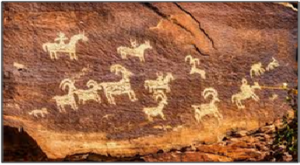
- Researchers recently found two ancient rock carvings (petroglyphs) on a flat rock inside a rock shelter on a hill behind Beerappa Temple in Manchirevula, Telangana.
About Petroglyphs:
- Nomenclature: The word comes from the Greek words petros (stone) and glyphein (to carve).
-
- Definition: They are symbolic images created by removing part of a rock surface through carving, incising, picking, or abrading.
- Petroglyph vs. Pictograph: Petroglyphs are carved into the rock, whereas pictographs (petrographs) are painted or drawn on the surface.
- Techniques: Creation methods include pecking, sculpting, drilling, and scratching with instruments harder than the rock surface.
- Global Presence: These are found on every continent except Antarctica.
- Concentrations: They are especially concentrated in Africa, South America, North America (mainly in the southwestern United States), Siberia, Australia, and Europe (Scandinavia, Spanish Galicia, Ireland and Italy).
- Chronology: In India, they are typically associated with the Mesolithic, Neolithic, and Chalcolithic periods, with some sites (like Ratnagiri) potentially dating back 20,000 years.
- Rock Types: They are often carved into hard surfaces like laterite (in Konkan) or quartzite boulders.
- Common Motifs: Themes include animals (bulls, deer, elephants), human figures in dynamic poses, and complex geometric patterns like circles or spirals.
- Cultural Utility: Beyond art, they served as territorial markers, astronomical maps, or even musical instruments known as “rock gongs”.
- Contemporary Threat: Sites like those in Ratnagiri have recently faced risks from industrial projects (e.g., mega oil refineries), leading to calls for protection by the Archaeological Survey of India (ASI).
Source:
Category: Polity and Governance
Context:
- Highway developers in India have urged from NHAI to classify the ongoing West Asia conflict as a force majeure event for road projects, citing supply disruptions.
About Force Majeure:
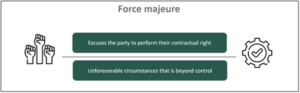
- Definition: It refers to extraordinary events or circumstances beyond human control that make it impossible or impractical for parties to fulfil their contractual obligations.
- Etymology: The phrase comes from French and literally means ‘superior force’.
-
- Nature of Events: Typically includes “Acts of God” (natural calamities like earthquakes or floods) and man-made events (war, riots, or government-imposed lockdowns).
- Predictability: To qualify, an event must be unforeseeable, external to the parties, and its consequences must be unpreventable.
- Variation: The application of force majeure can vary across legal systems, with some jurisdictions requiring a more stringent definition than others.
- Legal Framework in India: In India, the doctrine of force majeure is governed by section 56 of the Indian Contract Act, 1872. It provides that a contract becomes void if an act to be performed under the contract becomes impossible after the contract is made, or, by reason of some event, which the promisor could not prevent.
- Judicial Interpretations:
-
-
- Energy Watchdog v. CERC (2017): The Supreme Court held that if a contract already contains a force majeure clause, relief must be sought under that clause (Section 32) rather than general frustration (Section 56).
- Satyabrata Ghose v. Mugneeram Bangur (1954): Clarified that “impossible” in Section 56 does not just mean physical impossibility but also practical futility where the very foundation of the contract is shaken.
-
- Commercial Hardship: Courts have consistently ruled that mere economic unprofitability, price hikes, or increased difficulty do not constitute force majeure.
- Recent Government Notifications:
-
- COVID-19 as Force Majeure: In February 2020, the Ministry of Finance (Department of Expenditure) issued an Office Memorandum declaring the pandemic a “natural calamity” and a valid ground for invoking force majeure in government procurement contracts.
- Railways and MNRE: Both the Ministry of Railways and the Ministry of New & Renewable Energy (MNRE) issued similar notifications to provide relief to contractors during the national lockdown.
- Contract Extensions: The government provided blanket extensions of 3 to 6 months for completion of contractual obligations without penalties for projects affected by the pandemic.
Source:
Category: Miscellaneous
Context:
- Recently, the Sahitya Akademi has announced its annual Sahitya Akademi Awards in 24 Indian languages recognised by it.
About Sahitya Akademi Award:
-
- Establishment: It was formally inaugurated by the Government of India on March 12, 1954, and registered as an autonomous society in 1956.
- Nodal Ministry: It functions under the Ministry of Culture.
- Headquarters: It is located at Rabindra Bhawan, New Delhi.
-
- Languages: Awards are conferred annually for outstanding works in 24 languages (22 languages listed in the 8th Schedule of the Indian Constitution and 2 additional recognized languages: English and Rajasthani).
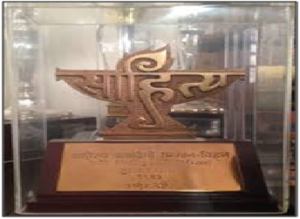
- Award Components: Winners receive an engraved copper plaque, a shawl, and a cash prize of ₹1,00,000.
-
- Plaque Design: The famous Indian filmmaker Satyajit Ray designed the Akademi’s plaque.
- Nationality: The author must be an Indian national.
- Eligible Works: Books must be first published during the five years prior to the award year. Posthumous awards are eligible only if the author died within this five-year window.
- ISBN Requirement: Starting from January 1, 2025, an ISBN is mandatory for all eligible books.
- Selection Process: It is a multi-stage process involving experts, a 10-member Preliminary Panel, and finally a 3-member Jury for each language.
- Recent Notable Winners (2025):
-
- English: Navtej Sarna for the novel Crimson Spring.
- Hindi: Mamta Kalia for the memoir Jeete Jee Allahabad.
Source:
- Category: Environment and Ecology
Context:
- Recently, Kaziranga National Park and Tiger Reserve cleared all formalities to translocate 50 wild Asiatic water buffaloes from the park to the Kanha Tiger Reserve.
About Kanha Tiger Reserve (KTR):
- Location: It is situated in the Maikal range of the Satpuras, spanning the Mandla and Balaghat districts of Madhya Pradesh.
- Historical Timeline: Originally a reserve forest (1879), it was declared a wildlife sanctuary in 1933, a National Park in 1955, and became one of the first nine reserves under Project Tiger in 1973-74.
-
- Drainage System: The reserve is part of the Narmada Catchment area, with the Banjar, Halon, and Surpan rivers forming its primary drainage.
- Terrain: It features a diverse landscape of plateaus (locally called dadars), steep upper slopes, and undulating valleys.
- Corridors: KTR maintains vital wildlife corridors connecting it to Pench Tiger Reserve (MP) and Achanakmar Tiger Reserve (Chhattisgarh).
-
- Vegetation Types: The park is dominated by Tropical Moist Deciduous forests, specifically evergreen Sal (Shorea robusta) and mixed deciduous trees like Tendu, Jamun, and Arjun.
- The “Jewel of Kanha”: It is the exclusive home of the Hard Ground Barasingha (Rucervus duvaucelii branderi), the state animal of MP, which was saved from near-extinction here.
- Flagship Species: It hosts a high density of Royal Bengal Tigers, along with Leopards, Sloth Bears, and Indian Wild Dogs (Dholes).
- Avian Diversity: Over 300 bird species inhabit the park, including the Crested Serpent Eagle and the Indian Paradise Flycatcher.
-
- First Mascot: Kanha is the first tiger reserve in India to introduce an official mascot, “Bhoorsingh the Barasingha”.
- Literary Inspiration: The dense forests of Kanha are widely believed to be the inspiration for Rudyard Kipling’s The Jungle Book.
- Tribal Heritage: The region was originally inhabited by the Gond and Baiga tribes, who were later relocated from the core area to protect the tiger habitat.
- Sunset Point: Bamni Dadar is a famous plateau within the reserve known for its panoramic sunset views and herbivore sightings.
- Conservation Success: KTR’s management is a “gold standard” for predator-prey balance and successful reintroduction programs (e.g., translocating Barasingha to Satpura).
- Documentary Fame: The National Geographic documentary Land of the Tigers (1980) was filmed here, showcasing its biodiversity to a global audience.
Source:
Category: Science and Technology
Context:
- Recently, the Government of Gujarat has launched an intensive statewide vaccination campaign to control the spread of Foot and Mouth Disease (FMD).
About Foot and Mouth Disease (FMD):
- Causative Agent: FMD is caused by an Aphthovirus belonging to the Picornaviridae family.
-
- Viral Serotypes: There are seven globally recognized serotypes: O, A, C, SAT-1, SAT-2, SAT-3, and Asia-1.
- Prevalence in India: Only three serotypes are currently circulating in India: O, A, and Asia-1. Serotype O is responsible for the majority (approx. 90%) of outbreaks.
- Eradicated Serotype: Serotype C has not been reported globally since 2004 and in India since 1995; it has been excluded from Indian vaccine formulations.
- Target Animals: It affects cloven-hoofed animals (those with divided hooves) including cattle, buffalo, sheep, goats, pigs, and deer.
- Transmission Modes: It is highly contagious and spreads through direct contact, contaminated feed/water, and aerosols (the virus can travel significant distances via wind).
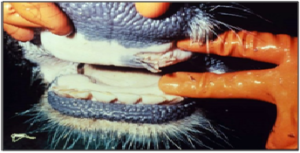
- Key Symptoms: It is characterized by high fever, blister-like sores (vesicles) on the tongue, lips, and hooves, leading to excessive salivation (drooling) and lameness.
- Age-Specific Mortality: While rarely fatal in adult animals, it causes high mortality in young calves and piglets due to myocarditis (heart inflammation), often termed “tiger heart”.
- Human Risk: It is not a major public health threat and is distinct from “Hand, Foot, and Mouth Disease” (HFMD) found in children.
- Treatment: Vaccination is the only effective preventive measure against FMD.
- Economic & Strategic Impact:
-
-
- Productivity Loss: The recovered animals suffer permanent damage including a 30-50% drop in milk yield, reduced fertility, and decreased “draft power” for farming.
-
- Trade Barriers: India faces significant trade embargoes on its dairy and meat products because FMD is a “Transboundary Animal Disease” (TAD).
- National Cost: The estimated annual economic losses in India range from Rs. 20,000 to Rs. 25,000 crores.
- Government Initiatives:
-
- NADCP: The National Animal Disease Control Programme was launched in 2019 as a 100% Centrally Funded scheme.
- Mission Targets: The programme aims to control FMD by 2025 through mass vaccination and achieve total eradication by 2030.
- Digital Monitoring: Every vaccinated animal is identified via ear-tagging with a unique ID, and data is uploaded to the Bharat Pashudhan (INAPH) portal for traceability.
Source:
(MAINS Focus)
Subject: GS-I (Society) & GS-II (Polity & Governance)
Sub-topic: Role of Women; Social Empowerment; Mechanisms for Protection of Vulnerable Sections; Challenges of Institutional Impunity
Introduction
The Jeffrey Epstein case transcends the narrative of a single criminal, exposing deeply embedded structures of power, patriarchy, and privilege that enable sexual exploitation. It is a stark global case study of how wealth can distort justice, silence victims, and create institutional impunity.
For India, grappling with its own challenges of sexual violence and institutional integrity, the Epstein affair offers critical lessons on the intersection of economic power, gender injustice, and legal accountability.
Conceptual Foundation: Understanding Structural Exploitation
The Epstein case is not an anomaly but a manifestation of systemic failures.
- Patriarchal Structures: As Simone de Beauvoir observed, systems of power are constructed and represented by men. This creates institutional impunity—where institutions protect dominant groups, making it difficult to hold powerful men accountable.
- Feminisation of Poverty: Epstein targeted girls from economically fragile backgrounds, where poverty robbed them of genuine choice. Economist Amartya Sen’s concept of “capability deprivation” explains how economic vulnerability disguises exploitation as opportunity.
- Patriarchal Contracts: Political theorist Carole Pateman’s concept explains how non-disclosure agreements transformed exploitation into commercial transactions, disguising coercion as consent.
Key Issues and Challenges
- Political Dimension: Elite Solidarity
- Epstein’s network of powerful men—politicians, royals, billionaires—functioned as a protective wall. This reflects elite male solidarity, where mutual protection leads to suppression of evidence.
- Indian Context: Raises concerns about “VIP culture” and differential treatment of powerful individuals by investigative agencies.
- Economic Dimension: Commodification of Vulnerability
- Epstein’s operation functioned as a transnational market—private jets, islands, and shell companies facilitated trafficking across borders. This demonstrates how capitalism and patriarchy intersect.
- Indian Context: Human trafficking for commercial exploitation in India is linked to economic distress and demand from power networks.
- Legal-Ethical Dimension: Distortion of Justice
- Initial plea deals, slow legal process, and media focus on Epstein as a “monster” diverted attention from systemic reform.
- Victim Blaming: Societal tendency to doubt victims is a patriarchal tool. The #MeToo movement globally highlighted how survivors face trial by media before perpetrators face legal scrutiny.
- Indian Context: Despite Nirbhaya case (2012) reforms, challenges persist in conviction rates and handling victim testimonies.
- Social Dimension: Media and Narrative Control
- Sensationalism distracts from structural questions. Ghislaine Maxwell’s portrayal as sole “recruiter” while powerful clients remained unnamed illustrates selective redirection of responsibility.
Critical Analysis: Evaluating Responses
- Strengths: Survivor courage forced global conversation. Maxwell’s conviction showed delayed justice is possible.
- Weaknesses:
- Lack of International Cooperation: Transnational networks exploit gaps in extradition treaties.
- Inadequate Legal Definitions: Need to re-examine consent laws, especially regarding minors and economic duress. Indian law grapples with nuanced application of POCSO Act, 2012.
- Attack on Feminist Scholarship: Undermining gender studies weakens frameworks to understand power and exploitation.
Way Forward
- Strengthen Institutional Independence: Insulate investigative agencies from political/economic influence. Strengthen Lokpal and Lokayuktas Act, 2013.
- Reform Legal Processes: Fast-track sexual violence cases. Strengthen Witness Protection Scheme, 2018.
- Economic Empowerment: Address feminisation of poverty through schemes like Beti Bachao, Beti Padhao.
- Gender Sensitisation: Mandate training for police, prosecutors, judiciary based on Justice Verma Committee (2013) recommendations.
- Global Cooperation: Enhance international legal cooperation against human trafficking.
Conclusion
The Epstein case warns that gender justice requires challenging entrenched power structures. It reveals that safety remains precarious when wealth can purchase impunity. For India, the path lies in strengthening democratic institutions to uphold constitutional equality, blind to power and privilege.
UPSC Mains Practice Question
- The Jeffrey Epstein case reveals that sexual exploitation is not merely individual deviance but a product of interlocking structures of patriarchy, economic power, and institutional impunity. Critically analyse. (150 words)
Subject: GS-II (Polity & Governance) & GS-III (Public Health)
Sub-topic: Issues relating to development and management of Social Sector/Services relating to Health; Government policies and interventions; Welfare Schemes for Vulnerable Sections.
Introduction
India’s prisons, envisioned as reformative institutions, have become epicentres of public health emergencies. The Jalpaiguri Central Jail outbreak (92 HSV infections, 7 deaths during 2025-26) is symptomatic of systemic governance failure. With national occupancy at 131% (NCRB 2023), overcrowding directly contravenes Articles 21 and 47. This note examines the constitutional, administrative, and social dimensions of this crisis.
Background: Right to Health Behind Bars
- Constitutional Mandate: SC in Parmanand Katara (1989) held health integral to Article 21. Ramanurthy v. Karnataka (1996) directed addressing overcrowding and medical facilities.
- Statutory Framework: Model Prison Manual, 2016 prescribes mandatory screening, one doctor per 300 prisoners, and psychiatrists.
- Institutional Gap: Prisons remain siloed from public health discourse. India Justice Report 2025 highlights critical shortages rendering Manual ineffective.
Key Challenges: Multidimensional Analysis
- Social: Overcrowding as Force Multiplier
- Jalpaiguri at 171% occupancy made infection control impossible. Kandi Sub-Jail historically exceeded 400%.
- 30% inmates in Kerala prisons have skin diseases (2023). HIV prevalence significantly higher than national average.
- Administrative: Neglect and Vacancies
- 43% vacancy rate for medical officers creates patient-doctor ratio 2.6 times higher than recommendation.
- Only 25 psychologists for 5.7 lakh inmates. Prisons lack isolation wards and diagnostic equipment.
- Policy: The Undertrial Conundrum
- Over 75% prisoners are undertrials, acting as disease conduits to wider community.
- Lancet study (2023): Prisoners 5 times more likely to develop TB. Inadequate screening allows disease entry.
- Ethical: The Invisible Vulnerable
- Societal apathy (“they deserve it”) ignores state’s parens patriae responsibility. Seven deaths from manageable virus represents ethical failure.
Critical Analysis: Framework Evaluation
- Strengths: Model Prison Manual 2016 comprehensive; NHRC inspection powers; Home Ministry’s 2025 TB screening order; West Bengal’s 2020 undertrial release shows decongestion possible.
- Weaknesses:
- Non-uniform enforcement across States
- Prisons outside National Health Mission ambit
- Glacial trial pace for undertrials
- India’s “warehousing” model vs Norway’s rehabilitation approach
Way Forward
- Decongestion: Fast-track undertrial trials; expand CrPC Section 436 use; expedite foreign national repatriation.
- NHM Integration: Regular health camps; telemedicine; staff training in infection control.
- Fill Vacancies: Time-bound recruitment with incentives for challenging postings.
- Infrastructure: Ventilated barracks; mandatory isolation wards.
Conclusion
The prison health crisis reflects the state’s commitment to constitutional justice. Until we recognise that incarceration does not forfeit health rights, outbreaks will recur. Breaking administrative silos and viewing prison health as integral to public health is essential. Prison reform tests our civilisational humanity.
UPSC Mains Practice Question
- The persistent public health crisis in Indian prisons exemplifies the state’s failure to reconcile reformatory vision with overcrowding and administrative neglect. Critically examine the constitutional and governance challenges in ensuring prisoners’ right to health, suggesting a comprehensive reform framework. (250 words)