

Archives
(PRELIMS Focus)
Category: History and Culture
Context:
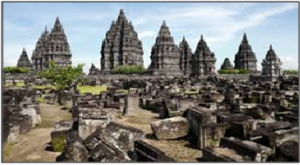
- India and Indonesia have partnered for the restoration of the Prambanan Temple complex in the Special Region of Yogyakarta in southern Java.
About Prambanan Temple:
-
- Location: It is located in Central Java, Indonesia, near Yogyakarta.
- Designation: It was designated a UNESCO World Heritage Site in 1991.
- Construction: It was built in the 9th century CE (around 850 CE) during the reign of the Sanjaya Dynasty of the Mataram Kingdom.
-
- Architectural Purpose: Its construction was likely a political and religious response to the nearby Buddhist Borobudur temple, marking the return of Hindu Sanjaya rule in Java.
- Deity: It is dedicated to the Trimurti—the three forms of the Supreme God in Hinduism: Brahma (the Creator), Vishnu (the Preserver), and Shiva (the Destroyer/Transformer).
- Vahana Temples: Opposite the three main shrines are three smaller temples dedicated to the deities’ vehicles (vahanas): Nandi (Shiva’s bull), Garuda (Vishnu’s eagle), and Hamsa (Brahma’s swan).
-
- Garbhagriha Statues: The main Shiva temple houses four chambers containing statues of Shiva, Ganesha (Western chamber), Agastya (Southern chamber), and Durga Mahisasuramardini (Northern chamber).
- Shiva-grha: According to the Shivagrha inscription (856 CE), the temple’s original name was Shiva-grha (House of Shiva) or Shiva-laya (Realm of Shiva).
- Architectural Style: it is characterized by tall, pointed spires typical of Hindu architecture, it reflects a blend of indigenous Javanese traditions and South Indian Pallava-style influences.
-
- Vertical Significance: The central Shiva temple stands 47 metres tall, symbolising Mount Meru, the cosmic center of the universe in Hindu mythology.
- Scale of Complex: Originally, the compound consisted of 240 structures, including the 8 main temples and 224 Perwara (ancillary) shrines arranged in concentric rows.
- Concentric Layout: The temple plan follows a Mandala layout, a sacred geometric configuration representing the Hindu universe.
- Ramayana Reliefs: The inner walls of the balustrades are adorned with extensive bas-reliefs depicting the epic Ramayana. Visitors follow these scenes by performing pradakshina (circumambulation).
- Technique: The temple was constructed using andesite stone with an interlocking (dry stone) method without the use of cement.
- Abandonment & Rediscovery: It was abandoned in the 10th century due to volcanic eruptions (Mount Merapi) or political shifts. It was formally “rediscovered” in 1811 by Colin Mackenzie, a surveyor for Sir Thomas Stamford Raffles.
- Cultural Diplomacy: In recent years, the Archaeological Survey of India (ASI) has been involved in restoration efforts, highlighting India’s soft power and deep-rooted cultural ties with Southeast Asia.
Source:
Category: Defence and Security
Context:
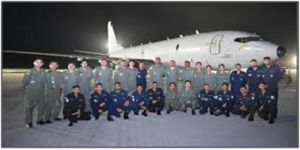
- The Indian Navy along with multiple partner nations is participating in Exercise Sea Dragon 2026, a United States Navy-led multinational anti-submarine warfare drill.
About Exercise Sea Dragon:
- Nature of Exercise: It is a United States Navy-led multinational, high-end maritime exercise specifically designed for Anti-Submarine Warfare (ASW) training.
- Frequency: It is conducted annually.
- Location: The exercise is typically hosted by the U.S. Navy’s 7th Fleet at Andersen Air Force Base in Guam, a U.S. island territory in the Western Pacific.
-
- Primary Objective: It aims to enhance the interoperability and tactical proficiency of participating nations in detecting, tracking, and neutralizing underwater threats.
- Participating Nations (2026): The most recent participants include the United States, India, Australia, Japan, and New Zealand.
-
- Historical Evolution: It began in 2019 as a bilateral exercise between the U.S. and Australia before expanding to include other regional partners.
- India’s Participation: The Indian Navy officially joined the exercise in 2021, reflecting its deepening security ties with Indo-Pacific allies. India deploys its P-8I Poseidon long-range maritime patrol and reconnaissance aircraft, which is a critical asset for its ASW capabilities.
- Focus on Aircraft: The exercise primarily tests the capabilities of Maritime Patrol and Reconnaissance Aircraft (MPRA) from different nations working in coordination.
- “Dragon Belt” Award: A unique competitive element where participating nations are graded on their ASW execution; the highest-scoring team is awarded the coveted Dragon Belt.
- Strategic Context: It is seen as a response to traditional and non-traditional maritime challenges in the Indo-Pacific, particularly the growing presence of Chinese submarines.
- Interoperability: A major goal is to standardize communication protocols and data links between nations using near-identical platforms like the P-8 aircraft.
- Training Components: It includes both classroom-based tactical discussions and hundreds of hours of in-flight training, culminating in tracking a live U.S. Navy submarine.
- Geopolitical Significance: It reinforces the commitment of participating nations (including Quad members) to a “Free and Open Indo-Pacific”.
- Collaborative Framework: It is part of a broader series of cooperative defence activities aimed at maintaining stability in strategic waterways like the Strait of Malacca and the wider Pacific.
Source:
Category: Geography
Context:
- A recent survey of the Hindon river has raised serious concerns about water quality at several locations, rendering the water “uninhabitable” for most aquatic life.
About Hindon River:
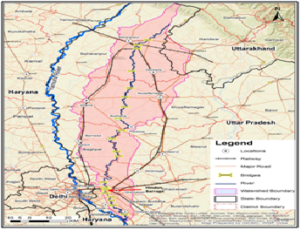
- Origin: The river originates from the Shakumbhari Devi Range in the Upper Shivalik Hills (lower Himalayas) in the Saharanpur district of Uttar Pradesh.
- Mouth of the river: It is a significant tributary of the Yamuna River, merging with it at Noida (Gautam Buddh Nagar district).
-
- Nature of Flow: It is an entirely monsoon-fed (rain-fed) river, with its water levels rising significantly during the rainy season.
- Course: The river flows for approximately 400 kilometres exclusively through the state of Uttar Pradesh. It passes through Saharanpur, Muzaffarnagar, Shamli, Meerut, Baghpat, Ghaziabad, and Gautam Buddh Nagar.
- Basin Size: The river has an approximate catchment area of 7,083 square kilometres, situated between the Ganga and Yamuna rivers.
- Key Tributaries: Its main tributaries include the Kali (West) River, Krishni River, and Dhamola River.
-
- Historical Significance: Traces of the Harappan Civilization (Indus Valley Civilization) have been found on its banks, notably at the site of Alamgirpur.
- Modern History: The river was a site of skirmishes during the 1857 Uprising (Indian Mutiny), including the Battle of Badli-ki-Serai.
- Hindon Air Force Base: One of the largest air bases of the Indian Air Force in Asia is located on its banks in Ghaziabad.
- “Dead River” Status: In 2015, the Central Pollution Control Board (CPCB) declared it a “dead river” because its dissolved oxygen (DO) levels were zero in many stretches, making it unfit for aquatic life.
- Water Quality Classification: It has been categorised under Category ‘E’ by the Uttar Pradesh Pollution Control Board (UPPCB), meaning it is suitable only for irrigation, industrial cooling, and controlled waste disposal.
- Pollution Sources: Major pollutants include untreated sewage from urban areas and industrial effluents from sugar mills, pulp and paper industries, and tanneries.
- NGT Intervention: The National Green Tribunal (NGT) has repeatedly intervened with orders to stop the discharge of untreated waste into the river and its tributaries.
- Rejuvenation Projects: Efforts include a planned 1.6 km riverfront development in Ghaziabad, modelled after Lucknow’s Gomti Riverfront, and participatory cleaning approaches by civil society.
Source:
Category: Science and Technology
Context:
- Recently, IIT Guwahati developed a MXene-based catalyst that can both produce hydrogen efficiently from water and act as a photocatalyst for desalination.
About MXene:
- Discovery: It was first discovered in 2011 by researchers at Drexel University, with Titanium Carbide, being the first and most widely studied member.
- Parent Material: MXenes are typically derived from MAX phases, which are bulk 3D layered ternary carbides or nitrides.
- Nomenclature: The name “MXene” is derived by removing “A” (usually Al, Si, or Ga) from the MAX phase and adding the suffix “-ene”.
-
- Synthesis Process: It is primarily produced through top-down selective etching, where the ‘A’ layer is chemically removed using strong acids like Hydrofluoric Acid (HF) or safer alternatives like lithium fluoride/hydrochloric acid.
- Unique Properties: They uniquely combine the metallic conductivity of transition metal carbides with the hydrophilic (water-loving) nature of their hydroxyl or oxygen-terminated surfaces.
- Comparison with Graphene: While both are 2D materials, MXenes are hydrophilic and more easily processed in aqueous solutions, unlike graphene which is naturally hydrophobic and requires functionalisation.
- Energy Storage: They are highly valued for supercapacitors and Li-ion batteries due to high volumetric capacitance and the ability to allow rapid ion intercalation between their layers.
- Water Treatment: They are used in desalination and wastewater treatment because their layered structure can act as a precise molecular sieve, filtering out ions and organic pollutants.
- Electromagnetic Interference (EMI) Shielding: Their high conductivity and 2D structure make them exceptionally effective at shielding electronic devices from radiation and interference.
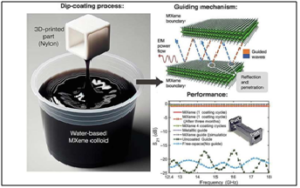
- Space Applications: Researchers have developed MXene-coated waveguides to guide microwaves in satellites, which significantly lightens the payload compared to traditional aluminum components.
- Biomedical Use: They are explored for cancer theranostics (imaging + therapy) and drug delivery due to their biocompatibility and ability to convert near-infrared (NIR) light into heat (photothermal therapy).
- Surface Chemistry: The surface functional groups (-O, -OH, -F) are critical as they allow for tunable properties, enabling scientists to adjust conductivity and chemical stability for specific tasks.
- Structural Stability: While strong in-plane, MXenes are prone to oxidation in water or air over time, often degrading into metal oxides, which is a major hurdle for commercialisation.
- Catalysis: They serve as efficient catalysts for green energy processes, including Hydrogen Evolution Reactions (HER) and water splitting.
- Recent Trends: Emerging research focuses on fluorine-free synthesis (to avoid toxic HF) and high-entropy MXenes to further enhance thermal and chemical stability.
Source:
Category: International Protocols
Context:
- MoEFCC recently submitted India’s First National Report on the implementation of the Nagoya Protocol to the Secretariat of the Convention on Biological Diversity.

About Nagoya Protocol:
- Full Name: The Nagoya Protocol is officially titled the Nagoya Protocol on Access to Genetic Resources and the Fair and Equitable Sharing of Benefits Arising from their Utilization.
-
- Adoption: It was adopted in 2010 in Nagoya, Japan, and entered into force on October 12, 2014.
- Nature of Agreement: It is a legally binding supplementary agreement to the Convention on Biological Diversity (CBD).
- Objective: Its primary aim is to fulfil the CBD’s third goal: the fair and equitable sharing of benefits arising from the use of genetic resources.
- Biopiracy Prevention: It provides a legal framework to prevent “biopiracy”—the unauthorized use of biological resources and traditional knowledge without compensating the source country or community
- Scope of Resources: It applies to genetic resources (animals, plants, microorganisms) and the traditional knowledge (TK) associated with them.
-
- Prior Informed Consent (PIC): Users (researchers/companies) must obtain the consent of the provider country before accessing genetic resources.
- Mutually Agreed Terms (MAT): Benefit-sharing must be based on a contract established between the provider and the user.
- Types of Benefits: Benefits can be monetary (royalties, joint ownership of IP) or non-monetary (technology transfer, research sharing, capacity building).
- Compliance Obligations: Parties must take measures to ensure that genetic resources used within their jurisdiction were accessed according to the PIC and MAT of the provider country.
- India’s Participation: India is a party to the protocol, having ratified it in 2012.
- Legal Framework in India: The protocol is implemented through the Biological Diversity Act, 2002 and the Biological Diversity Rules (amended in 2023).
- Three-Tier Governance: India uses a decentralized structure: National Biodiversity Authority (NBA) at the national level, State Biodiversity Boards (SBBs) at the state level, and Biodiversity Management Committees (BMCs) at the local body level.
Source:
(MAINS Focus)
UPSC Mains Subject: GS I – Society (Population), GS II – Social Justice, GS III – Economy
Introduction
India is transitioning from a “population explosion” narrative to one of a “greying population.” By 2051, the elderly (60+) will surge to 32.5 crore (20.5% of the population), while the pre-primary cohort (0-4 years) will crash to just 8.6 million.
This dual shift—a shrinking base and a bulging top—will strain healthcare, empty schools, and test fiscal resilience, demanding an urgent overhaul of India’s social infrastructure.
The Demographic Shift at a Glance (2021-2051)
| Indicator | 2021 | 2051 (Projected) | Key Implication |
|---|---|---|---|
| Total Population | 135.6 crore | 159.0 crore | Growth stabilizing; end of explosion debate. |
| Elderly (60+) | 13.1 crore (9.6%) | 32.5 crore (20.5%) | Massive rise in dependency. |
| Working Age (15-59) | 65.2% | 62.8% (↓ post-2041 peak) | Demographic window closing. |
| Pre-School (0-4 yrs) | 11.4 crore | 8.6 crore | School consolidation inevitable. |
| Median Age | 28 years | 40 years | Society is rapidly ageing. |
(Source: IIMAD & Population Foundation of India)
Key Challenges: A Two-Pronged Crisis
- The “Empty Classroom” Crisis (Social & Administrative)
- Declining Enrolments: The 0-4 years cohort is set to shrink by nearly 33%.
- Result: Rise of ‘uneconomic schools.’
- Data Point: Government schools reduced from 11.07 lakh (2014-15) to 10.18 lakh (2023-24)—a drop of ~90,000 schools.
- Paradox: Private schools increased by 43,000 in the same period.
- Risk: Teacher layoffs (as seen in Kerala) and further stratification in educational quality, widening the gap between rich and poor.
The “Silver Tsunami” Crisis (Economic & Fiscal)
- Healthcare Burden: Shift from communicable to non-communicable diseases (NCDs) requiring long-term, expensive geriatric care.
- Fiscal Strain: Increased demand for pensions and social security (e.g., NSAP) from a shrinking tax base.
- Lost Dividend: Working-age population peaks in 2041. If not skilled by then, India will have an unemployable aged population.
Critical Analysis: Policy Gaps
| Parameter | Existing Framework | Critical Gap |
|---|---|---|
| Education | NEP 2020 (ECCE focus) | No clear roadmap for consolidating “uneconomic schools” without job losses. |
| Health | NHP 2017, PM-JAY | PM-JAY covers hospitalization, not OP care/chronic diseases (core elderly needs). |
| Social Security | Code on Social Security, 2020 | Weak implementation; 90% workforce in unorganised sector has no old-age security. |
Way Forward: Strategic Interventions
Strategy 1: Converting Empty Classrooms into Quality Hubs
- Consolidation, not Closure: Merge low-enrolment schools into model schools (smart classrooms, labs) as suggested by the NEP 2020.
- Teacher Re-skilling: Retrain surplus teachers for special education, digital learning, or adult literacy.
Strategy 2: Building a Geriatric-Care Ecosystem
- Mainstream Geriatrics: Implement Dr. V.K. Paul Committee recommendations to include geriatric medicine in MBBS curriculum.
- Expand NPHCE: Integrate the National Programme for Health Care of the Elderly with PM-JAY for holistic coverage (OPD + IPD).
Strategy 3: Unlocking the “Second Demographic Dividend”
- Silver Economy: Promote industries focused on assistive devices, retrofitted housing, and elderly travel.
- Gender Dividend: Offset the shrinking workforce by boosting Female Labour Force Participation Rate (FLFPR) through targeted schemes (creches, safe transport).
Strategy 4: Learning from Global Models
- Japan: Community-based integrated care systems (Kaigo Hoken) for ageing.
- Sweden: Notional Defined Contribution (NDC) pension model for fiscal sustainability.
Conclusion
India’s demographic future is a tale of two transitions: a shrinking youth base and a swelling elderly population. The window to harness the demographic dividend is narrow (closing by 2041). By strategically consolidating educational infrastructure, building a robust geriatric healthcare system, and unlocking the gender dividend, India can transform these challenges into a sustainable “silver economy,” ensuring the constitutional promise of a life of dignity for all ages.
UPSC Mains Practice Question
- “India’s demographic dividend is peaking, but the country is simultaneously grappling with the challenges of an ageing population.” In light of recent population projections, analyse the socio-economic implications of this dual transition and suggest a comprehensive policy roadmap to mitigate the associated risks. (250 words)
Source: https://www.thehindu.com/opinion/op-ed/indias-future-demographic-challenges/article70759334.ece
UPSC Mains Subject: GS II – International Relations (Bilateral Relations, Regional Groupings, Effect of Foreign Policy)
Introduction
The recent escalation along the Pakistan-Afghanistan border, marked by Pakistani airstrikes killing over 400 Afghan civilians at a rehabilitation centre in Kabul, has opened a new fault line in India’s neighbourhood. This conflict, simmering since the Taliban’s return to power in 2021, threatens to destabilise an already volatile region grappling with the spillover effects of the West Asia war.
For India, this presents both a strategic dilemma and a diplomatic opportunity to leverage its influence within multilateral forums to prevent further humanitarian catastrophe.
The Conflict at a Glance: Key Drivers
| Dimension | Pakistan’s Position | Afghanistan’s (Taliban) Position |
|---|---|---|
| Core Grievance | Accuses Taliban of harbouring Tehreek-e-Taliban Pakistan (TTP), which attacks Pakistan. | Denies harbouring TTP; accuses Pakistan of violating its sovereignty. |
| Military Action | Operation Ghazab Lil Haq (Righteous Fury) – airstrikes on Taliban bases. | Retaliatory fire on Pakistani border posts. |
| Civilian Impact | TTP attacks killed 11 soldiers and 32 civilians in recent months. | Omid Rehabilitation Facility destroyed; ~400 civilians killed. |
| Geopolitical Angle | Believes Afghanistan is becoming an “Indian colony” due to India-Taliban ties. | Resents Pakistan’s 2021 support for their takeover, now seen as interference. |
Geopolitical Dimensions: A Region on Fire
- The “Three-Front” Entanglement for Pakistan
Pakistan’s military is increasingly overstretched:
- Eastern Front (India): Active hostility; no dialogue.
- Western Front (Afghanistan): Open warfare with Taliban.
- Transnational Front (Terrorism): Internal TTP threat.
- The Shifting Great Game
- U.S. Factor: The U.S., focused on Israel-Iran conflict, has given Pakistan tacit impunity by endorsing its “right to self-defence.”
- China’s Dilemma: The China-Pakistan Economic Corridor (CPEC) is threatened by instability in both Pakistan and Afghanistan.
- India’s Isolation? Pakistan’s narrative of an “Indian colony” in Afghanistan aims to isolate India regionally.
Critical Analysis: Why This Matters for India
| Aspect | Implication for India |
|---|---|
| Strategic | A two-front situation for Pakistan (India + Afghanistan) naturally relieves pressure on India’s western borders. |
| Terrorism | Mirrors India’s own cross-border terrorism problem, but with roles reversed—Pakistan now facing what it sponsored. |
| Humanitarian | Vulnerable Afghans, especially women and children, bear the brunt. Regional stability is a direct Indian interest. |
| Diplomatic | India’s limited leverage (no formal recognition of Taliban) constrains unilateral action. |
India’s Diplomatic Constraints and Opportunities
- Constraints
- No Formal Recognition: India deals with the Taliban regime but does not formally recognise it, limiting bilateral leverage.
- No Dialogue with Pakistan: Relations are frozen; backchannel communication is non-existent.
- Pakistan’s Narrative: Accusations of “Indian colony” hinder India’s proactive role.
- Opportunities
- Moral High Ground: India’s condemnation of the “cowardly” attack on a hospital (Omid Facility) and demand for an international inquiry positions it as a voice for humanitarian law.
- Multilateral Leverage (SCO): As a member of the Shanghai Cooperation Organisation (SCO), India can rally other members (China, Russia, Central Asian states) who are equally concerned about an “open war” in their backyard.
The Way Forward: A Strategic Roadmap for India
| Priority | Action | Expected Outcome |
|---|---|---|
| Immediate (Humanitarian) | Push for UN-led inquiry into civilian killings; provide humanitarian aid to affected Afghans. | Builds soft power; exposes Pakistan’s actions. |
| Short-Term (Diplomatic) | Convene an SCO Emergency Meeting under India’s regional concerns. | Creates collective pressure on Pakistan to de-escalate. |
| Medium-Term (Engagement) | Deepen sectoral engagement with Taliban (humanitarian, sports, education) without formal recognition. | Counteracts “Indian colony” narrative; builds people-level ties. |
| Long-Term (Stability) | Support an “Afghan-led, Afghan-owned” peace process; advocate for inclusive governance. | Ensures long-term regional stability essential for trade/energy connectivity (e.g., Chabahar Port). |
Global Best Practices: Lessons for Regional Conflict Management
- The Astana Process (Syria): A format where rivals (Russia, Turkey, Iran) cooperate to de-escalate. India could push for a similar “Neighbourhood Contact Group” on Afghanistan under UN or SCO auspices.
- The “Geneva Format” (Ukraine): Though limited, it shows the value of neutral platforms for dialogue.
Conclusion
The Pakistan-Afghanistan conflict is not a bilateral squabble but a regional time bomb. For India, silence is not an option. While a sense of “payback” for Pakistan’s past sponsorship of terrorism against India may be tempting, the larger goal must be regional stability. By leveraging its position in the SCO, upholding international humanitarian law, and engaging strategically with all stakeholders, India can emerge as a responsible regional power committed to peace on its western frontiers.
UPSC Mains Practice Question
- “The ongoing Pakistan-Afghanistan conflict has opened a new front of instability on India’s western border.” Analyse the geopolitical implications of this conflict for India and suggest a multi-pronged diplomatic strategy to safeguard India’s interests while promoting regional stability. (250 words)