

Archives
(PRELIMS Focus)
Category: Science and Technology
Context:
- The CSIR–CFTRI, Mysuru is participating in a project which envisages the development of Vitamin-E enriched annatto oil for use in food and cosmetic applications.

About Annatto:
- Nature: It is a natural food colouring and flavoring agent.
- Scientific name: Its scientific name is Bixa Orellana.
- Native: It is obtained from the seeds of the achiote tree, native to the tropical regions of the Americas.
- Cultivation in India: It is grown primarily in tropical states like Andhra Pradesh (cultivated by tribal communities in areas like Rampachodavaram).
- Chemical constituents: It contains carotenoids, primarily Bixin (oil-soluble) and Norbixin (water-soluble). It is also a rich source of Tocotrienols (a form of Vitamin E).
- Significance: About 70% of natural food colours come from annatto.
- Colouring: It adds a yellow-orange colour to foods like cheese, butter, yogurt, sausage, smoked fish, ice cream, and baked goods. The bold colour comes from carotenoids, which are plant pigments that are found in the coating of the seed.
- Usage: It is most often ground up into a powder or paste form for use.
- Flavour: It has a mild, peppery flavour when used in large amounts as well as a nutty and floral scent.
- Safety: It is safe for most people when used in normal food amounts. However, it might cause allergic reactions in some sensitive people.
- Improved health: It has been linked to various benefits, including reduced inflammation, improved eye and heart health, and anticancer properties. It is rich in antimicrobial compounds, which can limit the growth of bacteria, fungi, and parasites.
- Rich in antioxidants: It is rich in antioxidants that help neutralize the effects of harmful free radicals that can cause damage to cells. It is also high in tocotrienol, a form of vitamin E that some studies show could help with keeping bones strong and healthy.
- Applications: It is used in lipsticks, soaps, and hair oils due to its safe, non-toxic nature. Traditionally, it is also used as a fabric dye.
Source:
Category: Economy
Context:
- Recently, the Finance Ministry unveiled a new logo for Regional Rural Banks (RRBs) to signify a single and unified brand identity.
About Regional Rural Banks (RRBs):
- Establishment: RRBs were established under the Regional Rural Banks Act, 1976, on the recommendation of the Narasimham Committee on Rural Credit (1975).
- Objective: Their mission is to fulfil the credit needs of the relatively unserved sections in rural areas: small and marginal farmers, agricultural labourers, and socio-economically weaker sections.
- Collaboration: They are formed in collaboration by the Central Government, State Governments, and Sponsoring Commercial Banks to give loans to rural areas.
- Regulation: Regional Rural Banks are regulated by the RBI and supervised by the National Bank for Agriculture and Rural Development (NABARD).
- First RRB: Rathama Grameen Bank was the first RRB bank and was established on 2nd October 1975.
- Configuration: RRBs were configured as hybrid micro-banking institutions, combining the local orientation and small-scale lending culture of the cooperatives with the business culture of commercial banks.
- PSL target: The RBI has set a Priority Sector Lending (PSL) target of 75% of total outstanding advances for RRBs as against 40% for Scheduled Commercial Banks.
- Ownership: Sponsored by the Commercial Banks, the equity of RRBs is held by the central government, concerned state government, and the sponsor bank in the proportion of 50:15:35.
- Area of operation: The area of operation of RRBs is limited to the area as notified by the Government of India, covering one or more districts in the State.
- Sources of Funds: It comprises owned funds, deposits, borrowings from NABARD, sponsor banks and other sources, including SIDBI and the National Housing Bank.
- Management: The Board of Directors manages these banks, overall affairs, which consists of one Chairman, three Directors as nominated by the Central Government, a maximum of two Directors as nominated by the concerned State Government, and a maximum of three Directors as nominated by the sponsor bank.
- Network size: At present, 28 RRBs operate across the country with a vast network of over 22 thousand branches in more than 700 districts.
Source:
Category: Defence and Security
Context:
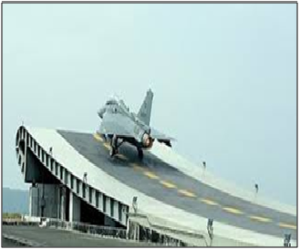
- Recently, INAS 335, the ‘Ospreys’, the second Indian Naval Air Squadron to operate MH-60R helicopters, was commissioned at INS Hansa, Goa.
About INS Hansa:
- Location: INS Hansa is an Indian Naval Air Station located near Dabolim, Goa.
- Establishment: The station was originally commissioned on 5 September 1961 at Sulur near Coimbatore, Tamil Nadu, and was initially co-located with the Indian Air Force’s Sulur Air Force Station.
- Relocation: The base includes a civil enclave, which functions as Dabolim Airport, handling domestic and international flights round-the-clock. Following the liberation of Goa, the Navy took over Dabolim airfield in April 1962, and INS Hansa was relocated to Dabolim in June 1964.
- Uniqueness: It is the largest naval airbase in India and houses some of the Indian Navy’s premier air squadrons.
- Significance: It houses various aircraft, including Kamov Ka-28 anti-submarine helicopters and MiG-29K fighters. The Navy is also progressing the acquisition of 15 MQ-9B Sea Guardian remotely piloted aircraft.
- Strategic Role: It is the hub for the Indian Navy’s western air operations, supporting maritime surveillance, search and rescue (SAR), enhanced Maritime Domain Awareness (MDA) and combat missions in the Arabian Sea.
Source:
Category: Government Schemes
Context:
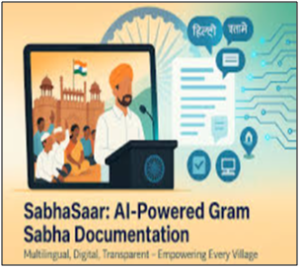
- SabhaSaar has been made available to all States/UTs, and Gram Panchayats are progressively adopting it for routine Gram Sabha and Panchayat meetings.
About SabhaSaar Initiative:
- Nature: It is an AI-enabled voice-to-text meeting summarisation tool.
- Nodal ministry: It is launched by the Ministry of Panchayati Raj.
- Objective: It aims to streamline documentation and empower stakeholders with instant access to meeting insights in panchayats, administrative bodies, and rural development projects.
- Adoption: It has been made available to all States/UTs, and Gram Panchayats are progressively adopting it for routine Gram Sabha and Panchayat meetings.
- Significance: It will bring uniformity in minutes of the gram sabha meetings across the country. Panchayat officials can use their e-GramSwaraj login credentials to upload video/audio recordings on ‘SabhaSaar’.
- Use of AI: It leverages the power of AI to generate structured minutes of meetings from gram sabha videos and audio recordings. The AI model used in SabhaSaar operates on AI and cloud infrastructure provisioned through the India AI Compute Portal under the India AI Mission of MeitY.
- Built on Bhashini: It is built on Bhashini, an AI-powered language translation platform launched by the government to bridge literacy, language, and digital divides. The tool generates transcription from a video or audio, translates it into a chosen output language and prepares a summary.
- Transcription in major Indian languages: It enables transcription in all major Indian languages like Hindi, Bengali, Tamil, Telugu, Marathi and Gujarati, in addition to English.
Source:
Category: International Organisations
Context:
- As Brazil passed the presidency of BRICS to India recently, it handed over a gavel made of recycled wood from the Amazon rainforest.

About BRICS:
- Nomenclature: The acronym ‘BRIC’ was coined by British economist Jim O’Neill in 2001 to represent the emerging economies of Brazil, Russia, India, and China.
- Establishment: BRIC began functioning as a formal group during the G-8 Outreach Summit in 2006, held its first summit in Russia in 2009, and became BRICS with the inclusion of South Africa in 2010.
- Members: The initial five BRICS members were Brazil, Russia, India, China, and South Africa. In 2024, Iran, the United Arab Emirates (UAE), Egypt, and Ethiopia joined the group while Indonesia joined in 2025. Saudi Arabia has not yet formalised its BRICS membership, while Argentina, initially expected to join in 2024, later opted out.
- Key initiatives: It includes New Development Bank (2014), Contingent Reserve Arrangement (CRA), BRICS Grain Exchange, BRICS Rapid Information Security Channel, STI Framework Programme (2015) etc.
- Significance: BRICS accounts for 45% of the world’s population and 37.3% of global GDP, surpassing the EU’s 14.5% and the G7’s 29.3%.
- Energy security: With Iran, Saudi Arabia, and the UAE joining, BRICS now accounts for around 44% of global crude oil production positioning it as a key player in ensuring energy security and influencing oil prices and supply chains.
Source:
(MAINS Focus)
(UPSC GS Paper III – Defence, Indigenisation of Technology, Industrial Growth; GS Paper II – Strategic Capability & Governance)
Context (Introduction)
India’s aspiration to become a developed nation by 2047 is inseparable from strategic self-reliance. A strong defence industrial base is central to national security, economic resilience, technological advancement, and India’s emergence as a credible global power.
Main Arguments: Why a Robust Defence Industrial Base Matters
- Correcting Historical Vulnerabilities: For decades, India followed a paradoxical approach—excluding domestic private industry while relying heavily on foreign private suppliers. This led to excessive import dependence, constrained innovation, and strategic vulnerability during crises or supply-chain disruptions.
- Reform-Driven Ecosystem Maturation: Recent reforms—private sector entry, liberalised FDI, corporatisation of the Ordnance Factory Board, expanded ‘Make’ procurement categories, and innovation promotion—have transformed the ecosystem. Defence production has increased, and exports now reach over 80 countries, signalling ecosystem maturity.
- Strategic Autonomy and Resilience: Global conflicts in Europe, West Asia, and Asia have highlighted the fragility of international supply chains. Countries with strong domestic defence industries have demonstrated greater resilience. For India, facing persistent land and maritime security challenges, defence self-reliance is indispensable.
- Economic and Geopolitical Leverage: Defence manufacturing generates high-skilled employment, stimulates advanced manufacturing, and integrates India into global supply chains. Defence exports also enhance geopolitical influence by positioning India as a reliable security partner.
- Emerging Global Opportunities: Rising defence spending in Europe, saturation of traditional suppliers, and demand for cost-effective platforms create export opportunities. India’s strategic location in the Indian Ocean Region and expanding diplomatic footprint strengthen its prospects as a defence supplier.
Challenges and Criticisms
- Regulatory and Procedural Bottlenecks: Complex export licensing, slow approvals for joint ventures and technology transfers, and fragmented institutional coordination continue to deter private investment, especially for MSMEs and startups.
- Uncertain Demand Signals: Absence of long-term demand projections reduces investor confidence for capital-intensive defence manufacturing.
- DRDO’s Evolving Role: While Defence Research and Development Organisation has built strategic capabilities, overlapping roles in research, development, and production dilute efficiency and delay commercialisation.
- Financial and Testing Constraints: Manufacturers face high-cost credit, stringent domestic standards, limited testing facilities, and prolonged trials, reducing competitiveness against established global players.
- Fragmented Export Facilitation: Multiple ministries and agencies handle defence exports, creating coordination gaps and slowing market outreach.
Reforms and Way Forward
- Simplify and Stabilise Regulations: Streamline export licensing, technology-transfer approvals, and joint venture clearances, ensuring policy continuity to meet the target of ₹50,000 crore in defence exports by 2029.
- Reorient DRDO–Industry Roles: DRDO should focus on frontier research, while production, scaling, and commercialisation shift decisively to public and private industry, aligning with global best practices.
- Create Dedicated Export Facilitation Agency: A professionally staffed, single-window defence export agency can coordinate outreach, financing, certifications, and government-to-government engagements.
- Strengthen Financial and Testing Ecosystems: Introduce specialised export financing instruments, expand integrated testing facilities, adopt international certification norms, and ensure time-bound trials.
- Leverage Strategic Instruments: Use lines of credit, government-to-government agreements, and long-term service commitments to enhance India’s credibility as a defence supplier.
Conclusion
A strong defence industrial base is not merely about reducing imports; it underpins national security, economic growth, technological leadership, and diplomatic influence. Deepening reforms and sustaining policy momentum will define India’s transition into a confident and influential global power by 2047.
Mains Question
- Why is a strong defence industrial base critical for India’s national security and economic aspirations? Examine the reforms required to make India a competitive defence manufacturing and export hub.(250 words, 15 marks)
Source: The Hindu
(UPSC GS Paper I – Society: Vulnerable Sections; GS Paper II – Governance, Judiciary & Social Justice)
Context (Introduction)
A recent Supreme Court of India judgment describing child trafficking as a “deeply disturbing reality” brings renewed focus on India’s persistent trafficking networks, despite constitutional safeguards, special laws, and multiple government schemes aimed at child protection.
Scale and Nature of Child Trafficking in India
- Magnitude of the Problem: As per NCRB Crime in India data, over 2,200 children were trafficked in 2022, with girls constituting a majority. States such as West Bengal, Telangana, Bihar, Maharashtra and Assam consistently report high numbers due to poverty, migration corridors and porous borders.
- Organised Crime Networks: Trafficking operates through decentralised yet interconnected verticals—recruitment, transportation, harbouring and exploitation—often spread across States, complicating detection and prosecution, as noted by the Supreme Court.
- Forms of Exploitation: Children are trafficked for commercial sexual exploitation, forced labour, domestic work, begging, and increasingly for online sexual abuse material, reflecting adaptation to digital platforms.
Reasons for Persistence of Child Trafficking
- Socio-Economic Drivers: Poverty, seasonal migration, debt bondage, lack of schooling, family disintegration and disasters push children into vulnerability. UNICEF notes that children from migrant and informal labour households face disproportionately higher trafficking risks.
- Demand-Side Factors: Urban informal economies, tourism hubs, construction sites and domestic work markets sustain demand. NCRB data shows trafficking hotspots align with major urban and industrial centres.
- Weak Preventive Governance: Limited surveillance in source areas, understaffed Child Welfare Committees, and poor inter-State coordination weaken early detection. Parliamentary Standing Committee reports have flagged capacity gaps in child protection institutions.
- Low Conviction Rates: Conviction rates under trafficking-related provisions remain low (often below 30%), reflecting poor investigation quality, victim intimidation, and insensitive evidentiary standards—issues directly addressed by the recent Supreme Court judgment.
Legal and Policy Framework
- Constitutional Mandate: Articles 23 and 24 prohibit trafficking and child labour; Articles 15(3), 21 and 39(f) mandate special protection for children’s dignity and development.
- Statutory Architecture: The Immoral Traffic (Prevention) Act, Juvenile Justice Act, POCSO Act and IPC Sections 370/370A collectively criminalise trafficking, exploitation and abuse.
- Judicial Reinforcement: The Supreme Court has clarified that trafficked children are injured witnesses, whose testimony cannot be discarded due to minor inconsistencies, aligning with trauma-informed justice principles.
Government Schemes and Institutional Response
- Anti-Human Trafficking Units (AHTUs): Established in many districts to focus on detection, rescue and investigation, supported by the Ministry of Home Affairs, though uneven operational capacity persists.
- Ujjawala Scheme: Targets prevention, rescue, rehabilitation and reintegration of women and child victims of trafficking for commercial sexual exploitation; however, CAG audits have pointed to gaps in coverage and monitoring.
- Mission Vatsalya (Child Protection Services): Supports Child Welfare Committees, shelter homes, counselling and education, forming the backbone of post-rescue care.
- Operation Smile / Muskaan: Police-led initiatives that have traced thousands of missing children annually, reducing trafficking risks through coordinated rescue operations.
- TrackChild Portal: A national digital platform integrating police and child welfare data to track missing and found children, improving inter-State coordination.
Gaps and Criticisms
- Implementation Deficit: Reports by NCPCR and CAG highlight overcrowded shelters, staff shortages, and inadequate psychosocial care, increasing risks of re-trafficking.
- Reactive Policy Bias: Most interventions focus on rescue after exploitation, while preventive measures such as livelihood security, schooling and social protection in source areas remain weak.
- Fragmented Governance: Multiple ministries—Home, Women & Child Development, Labour—operate in silos, diluting accountability and follow-up.
- Reintegration Challenges: Without sustained education, skill training and income support, rescued children often return to vulnerable environments.
Way Forward
- Shift to Prevention-Centric Strategy: Strengthen social protection, universal schooling, nutrition, and livelihood programmes in trafficking-prone districts, in line with SDG 8.7 (ending child trafficking).
- Trauma-Informed Justice System: Mandatory training for police, prosecutors and judges on child psychology and victim-sensitive evidence handling, institutionalising Supreme Court guidelines.
- Unified Anti-Trafficking Framework: Operationalise a national anti-trafficking authority to coordinate intelligence, rescue, rehabilitation and prosecution across States.
- Strengthen Rehabilitation and Aftercare: Improve quality of shelters, long-term education, skill development and family reintegration to prevent re-trafficking.
- Data-Driven Monitoring: Enhance NCRB data granularity, map trafficking corridors, and track repeat offenders to improve deterrence and accountability.
Conclusion
Child trafficking in India reflects deep socio-economic inequalities and governance gaps. While judicial interventions have strengthened victim-centric justice, eliminating trafficking requires a preventive, welfare-oriented and institutionally coordinated approach that protects children before exploitation occurs.
Mains Question
- Analyse the socio-economic causes of child trafficking and critically evaluate the effectiveness of government schemes in addressing the problem. Suggest a way forward.(250 words, 15 marks)
Source: The Hindu