

Archives
(PRELIMS Focus)
Category: International Organisations
Context:
- Union Minister Ashwini Vaishnaw clarified that the World Economic Forum at Davos mainly serves as an ideas-exchange forum, not a formal trade negotiation platform.
About World Economic Forum (WEF):
-
- Nature: It is an international non-profit organisation that brings together business, political, and social leaders to discuss global challenges.
- Establishment: Established in 1971, the WEF promotes stakeholder theory for broader societal impact.
- Headquarters: Its headquarters is located in Geneva, Switzerland.
- Mission: This body has a concise mission: ‘To improve the state of the world through public-private cooperation’.
-
- Funding: It is primarily supported by partnering corporations, typically with annual turnovers exceeding USD 5 billion.
- Key event: The WEF is best known for its annual WEF Meeting at Davos, the Swiss ski resort. Davos brings together around 3,000 participants (including paying members and select invitees)- investors, business leaders, political leaders, economists, celebrities, and others to discuss global issues across 500 sessions
- Major reports: WEF regularly publishes globally recognized reports, including the Global Competitiveness Report, Global Gender Gap Report, Energy Transition Index, Global Risk Report, Global Travel and Tourism Report.
- Significance: WEF addresses major global concerns such as climate change, economic challenges, and global security. Key diplomatic moments at WEF include:
- Korean Diplomacy (1989): North and South Korea held first ministerial-level meetings in Davos.
- German Reunification (1989): East German Prime Minister and German Chancellor met at WEF to discuss reunification.
- South African Milestone (1992): South African President de Klerk, Nelson Mandela, and Zulu prince Mangosuthu Buthelezi made their inaugural joint appearance outside South Africa, marking a significant milestone in the country’s political transition.
- G20 Genesis (1998): WEF emphasized the need to involve major developing countries. Therefore, the concept of G20 emerged, initially limited to finance ministers.
Source:
Category: Environment and Ecology
Context:
- Centre designated 0–1 km buffer around Rajasthan’s Kumbhalgarh Wildlife Sanctuary in the Aravalli Range as an eco-sensitive zone to protect its fragile biodiversity.
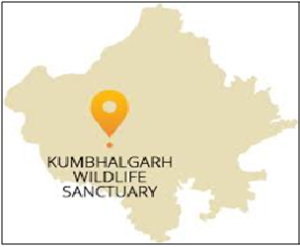
About Kumbhalgarh Wildlife Sanctuary:
- Location: It is situated in the Rajsamand district of Rajasthan.
-
- Area: It spreads in an area of 610.5 sq.km. stretching across the Aravalli ranges.
- Coverage: It covers four hill and mountain ranges of the Aravallis – the Kumbhalgarh Range, the Sadri Range, the Desuri Range, and the Bokhada Range.
- Establishment: Once the hunting grounds of royals, this area was declared a wildlife sanctuary in 1971.
- Nomenclature: It encompasses the historic Kumbhalgarh Fort and is also named after the fort.
- Landscape: The sanctuary’s landscape is varied. The eastern part has hills ranging from 500 to 1300 meters high, while the western part borders the Marwar plains.
- Drainage: The eastern section is the starting point for the Banas River, which flows into the Bay of Bengal. Meanwhile, rainwater from the western slopes forms small rivers like Sukdi, Sumer, Mithdi, and Kot, all of which are tributaries of the Luni River that eventually flow into the Arabian Sea.
- Flora: The flora of the sanctuary is mainly herbs. The species of Churel, Dhok, Khair, and Salar grow abundantly. among others.
- Fauna: The sanctuary provides a natural abode to many creatures like Wolf, Leopards, Sloth bear, Hyena, jackal, Jungle cat, Sambhar, Nilgai, Chausingha (the four horned antelope), Chinkara and Hare.
Source:
Category: History and Culture
Context:
- The Prime Minister of India recently paid homage to freedom fighter Parbati Giri on the occasion of her birth centenary.
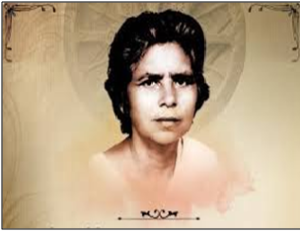
About Parbati Giri:
-
- Birth: Born on 19 January 1926 to mother Srimati and father Dhananjay Giri of Samleipadar village near Bijepur of the present Bargarh district and undivided Sambalpur district of Odisha, she was filled with patriotism since childhood.
- Entry into freedom struggle: In 1938, she left home to dedicate herself fully to the freedom struggle through the Indian National Congress, embracing Gandhian ideals such as khadi, self-reliance, and constructive social work as a way of life.
- Contribution in independence movement: In 1942, she was just 16 when she was in the forefront of agitation following Mahatma Gandhi’s ‘Quit India’ movement. She had also staged an agitation at Bargarh Court to persuade the lawyers to boycott the erstwhile court in defiance of the British.
- Influence of Mahtama Gandhi: She was inspired by Gandhian philosophy. She had even come in contact with Mahatma Gandhi. She had taken tutelage at the famous Ashrams in Bari, Wardha, and Delhi Gandhi Sebashram.
- Life after independence: While she fought for the Independence of India, after independence she dedicated her life as a social worker. Parbati Giri led famine relief operations during the 1951 Odisha famine. She worked extensively on prison reforms, leprosy eradication, and the welfare of the destitute and marginalized.
- Other names: Also known as the Mother Teresa of Western Odisha, and epithet as ‘Banhi-kanya’ (daughter of fire), Giri was a prominent freedom fighter from Odisha.
- Legacy: Dearly known as Badamaa (Big mother) to the inmates of her Ashrams, the legendary woman from the Western Odishan district Bargarh worked for the poor and downtrodden till her death.
Source:
Category: Economy
Context:
- Recently, the government has increased the Central Silk Board’s financial approval limit to ₹1 crore from ₹50 lakh by amending Rule 22 of the Central Silk Board Rules, 1955.
About Central Silk Board:
-
- Nature: It is a statutory body established in 1948 by an Act of Parliament.
- Nodal ministry: It is working under the administrative control of Ministry of Textiles, Government of India.
- Headquarters: Its headquarters is located in Bengaluru.
- Major functions:
-
- To advise the central Government on all matters relating to the development of silk industry including import and export of raw silk
- To prepare and furnish such other reports relating to the silk industry as may be required by the Central Government from time to time.
- To create greater opportunities for gainful employment and improved levels of income in sericulture through spread of scientific sericulture practices.
About Silk Production in India:
- Global Standing: India is the 2nd largest producer of silk globally (after China) and the largest consumer.
-
- Variety: India is the only country producing all five commercial varieties: Mulberry, Tropical Tasar, Oak Tasar, Eri, and Muga.
- Top Producers: Karnataka leads the chart, followed by Andhra Pradesh and Tamil Nadu.
- Major Schemes:
-
- Silk Samagra: An integrated scheme for the development of the silk industry focusing on R&D, seed organization, and quality certification.
- SAMARTH: A capacity-building and training initiative in the textile sector.
Source:
Category: Miscellaneous
Context:
- Recently, India launched the Responsible Nations Index (RNI) at the Dr. Ambedkar International Centre, New Delhi.
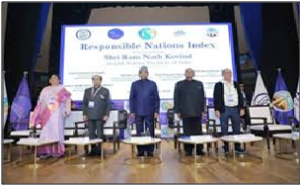
About Responsible Nations Index:
- Development: It is developed by the World Intellectual Foundation (WIF) in collaboration with Jawaharlal Nehru University (JNU), IIM Mumbai, and the Dr. Ambedkar International Centre.
- Uniqueness: It is India’s first globally anchored index.
-
- Objective: It is designed to assess countries on the basis of responsible governance, social well-being, environmental stewardship, and global responsibility, moving beyond conventional power- and GDP-based measures.
- Coverage: The Index covers 154 countries and is built on transparent, globally sourced data to ensure credibility and comparability.
- Significance: It seeks to promote a global dialogue on ethics, responsibility, global food security, and sustainable leadership in international affairs. It is also expected to contribute to a more balanced and value-based understanding of national performance on the global stage.
- Dimensions: It is structured around three core dimensions, namely
- Internal responsibility: It focuses on dignity, justice, and the well-being of citizens;
- Environmental responsibility: It is covering stewardship of natural resources and climate action.
- External responsibility: It measures a country’s contribution to peace, cooperation, and global stability.
- Key highlights of Responsible Nations Index 2026:
-
- Top 3 countries: Singapore (Rank 1), Switzerland (Rank 2), Denmark (Rank 3)
- India is the top-ranked Asian nation. India ranks 16th globally, ahead of South Korea (21), Thailand (24) and Kyrgyzstan (22).
- 9 of the top 10 countries are European, underscoring Europe’s strength in institutional ethics.
Source:
(MAINS Focus)
GS II: “Separation of powers between various organs, dispute redressal mechanisms and institutions.”
Context (Introduction)
In December 2025, 107 Lok Sabha MPs submitted a notice for removal of a sitting Madras High Court judge, reviving debate on the impeachment (removal) mechanism of judges under the Constitution. While India’s removal law is among the most stringent globally, recent events highlight a procedural vulnerability at the admission stage.
Core Idea / Constitutional Framework
- Judicial removal is provided under:
- Article 124(4) & (5) – Supreme Court judges
- Articles 217(1)(b) & 218 – High Court judges
- Grounds: “Proved misbehaviour or incapacity”
- Procedure regulated by:
- Judges (Inquiry) Act, 1968
- Judges (Inquiry) Rules
- Removal requires:
- Address by each House of Parliament
- Special majority: majority of total membership + 2/3rd of members present and voting
- Purpose: Maximum protection of judicial independence
Where the Problem Lies?
The critical flaw is at the threshold stage:
- The Speaker (Lok Sabha) or Chairman (Rajya Sabha) has discretion to:
- Admit or disallow a motion for judicial removal
- If the motion is not admitted, the process ends immediately
- Article 124(5) does not prescribe any grounds on which the Presiding Officer may refuse admission
- Disallowance can occur without reasons, even if:
- The motion is signed by 100 MPs (LS) or 50 MPs (RS)
Resulting in a serious constitutional mechanism can be neutralised before inquiry begins
Judicial Interpretation of “Misbehaviour”
Though undefined in the Constitution, courts have clarified its scope:
- K. Veeraswami v. Union of India (1991)
- Judges are held to exceptionally high standards of integrity
- M. Krishna Swami v. Union of India (1992)
- Misbehaviour is not mere error of judgment
- Includes:
- Wilful abuse of office
- Corruption
- Lack of integrity
- Moral turpitude
Why This Matters
- Judicial Independence vs Accountability
- Excessive discretion at admission stage undermines accountability
- Yet weakening removal safeguards risks judicial intimidation
- Rule of Law Concerns
- A constitutional process becoming government-contingent
- Creates perception of selective accountability
- Separation of Powers
- Presiding Officers act as statutory authorities, not constitutional ones
- Their decision is open to judicial review, raising institutional friction
- Public Trust in Judiciary
- Failure to even inquire into serious allegations damages credibility
Way Forward (Reforms Without Diluting Independence)
- Statutory Clarification
- Amend the Judges (Inquiry) Act, 1968 to:
- Specify objective conditions for admission/disallowance
- Mandate written reasons for rejection
- Amend the Judges (Inquiry) Act, 1968 to:
- Automatic Inquiry Trigger
- Once numerical threshold is met, mandatory constitution of inquiry committee
- Time-bound Preliminary Scrutiny
- Limited procedural scrutiny, not substantive veto, at admission stage
- Transparency Safeguards
- Public disclosure of reasons (except sensitive material)
Conclusion
India’s judicial removal framework is substantively robust but procedurally fragile. While the Constitution rightly prioritises judicial independence, allowing a statutory gatekeeping veto to stall inquiry undermines accountability and public confidence. Reforming the admission stage—without lowering the removal threshold—is essential to preserve both judicial dignity and constitutional balance.
Mains Question
- “While the Constitution makes judicial removal deliberately stringent to protect independence, procedural discretion at the admission stage can dilute accountability.” Critically examine India’s constitutional and statutory framework for removal of judges and discuss how the balance between judicial independence and accountability can be ensured. (15marks)

GS-II: Role of media and civil society in democracy;
GS-IV: Ethics and Human Interface—determinants and consequences of ethical conduct; ethical concerns and dilemmas in public and private institutions.
Context (Introduction)
India’s media ecosystem is undergoing a profound transformation marked by “cable newsification” a shift from information to conflict-driven, spectacle-centric news. Television debates and social media amplification have increasingly prioritised outrage, polarisation and speed over verification, nuance, and public reasoning, raising concerns about journalism’s ability to act as a check on power.
Core Idea
In a constitutional democracy, journalism performs a normative governance role informing citizens, scrutinising authority, and enabling deliberative democracy. However, market-driven incentives, attention economics and algorithmic amplification have altered this role, turning news into performance rather than public service.
Journalism risks shifting from being the fourth pillar of democracy to a participant in political spectacle.
Key Challenges Highlighted
- Erosion of Trust
- Sensational framing of every issue as a “crisis” leads to credibility fatigue.
- Repeated exposure to outrage reduces public confidence in institutions and media alike.
- Polarisation and Feedback Loops
- Television debates reward confrontation over cognition.
- Social media platforms amplify extreme positions, creating self-reinforcing outrage cycles.
- Decline of Verification and Context
- Speed and competition undermine fact-checking, source verification and editorial restraint.
- Print media increasingly mimics television formats to stay relevant.
- Democratic Deficit
- Citizens are exposed to noise rather than knowledge, weakening informed participation.
- Journalism begins to inflate power narratives instead of interrogating them.
Why It Matters
- Democratic Governance:
A poorly informed public cannot hold governments accountable, weakening constitutional democracy. - Ethical Media Conduct:
Journalism without objectivity and truth violates core ethical values integrity, responsibility, and public interest. - Institutional Trust:
Persistent sensationalism accelerates the erosion of trust in democratic institutions. - Ethics of Communication:
The shift from truth-telling to attention-seeking reflects an ethical failure in balancing means and ends.
Way Forward
- Re-centring Core Journalistic Values
- Verification over virality, context over conflict, evidence over emotion.
- Editorial Accountability
- Stronger internal editorial standards and ethical codes to resist TRP-driven distortions.
- Role Differentiation
- Anchors as moderators, not ringmasters; debates that illuminate rather than intimidate.
- Responsible Use of Digital Platforms
- Harness social media for dissemination, not distortion; counter algorithmic bias with editorial judgement.
- Public Media Literacy
- Empower citizens to distinguish information from manipulation, reducing demand for sensationalism.
Conclusion
When journalism prioritises outrage over truth, democracy pays the price. Reclaiming journalism’s role as a check on power requires ethical recommitment, editorial courage and public support for substance over spectacle. In a noisy democracy, better journalism — not louder journalism — is the need of the hour.
Mains Question
- In the context of the growing ‘cable newsification’ of media, examine how market-driven journalism affects democratic accountability and ethical public discourse in India. What ethical principles and institutional safeguards are necessary to restore journalism’s role as a check on power? (250 words, 15 marks)