

Archives
(PRELIMS Focus)
Category: Geography
Context:
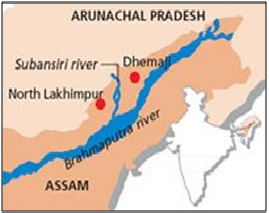
- India’s largest hydropower power project, Subansiri Lower Hydroelectric Project, finally began operating with one of its eight units after 20 years of work.
About Subansiri Lower Hydroelectric Project:
-
- Nature: It is a run-of-the-river hydro project being constructed on the Subansiri River, a tributary of the Brahmaputra.
- Location: It is located at Gerukamukh on the Arunachal Pradesh–Assam border.
- Development: The project is being developed by the state-run National Hydro Power Corporation (NHPC). The construction of the project has been underway since 2005.
- Capacity: Its capacity is 2,000 MW, and it consists of eight units of 250 MW each.
- Uniqueness: It will be the single largest hydroelectric plant in India when completed.
- Financing: The project cost was met through 70% equity and 30% debt financing by the provision of a term loan. The central government is providing budgetary support as part of the equity component.
- Structure: It consists of a concrete gravity dam, which will be 116 m high from the riverbed level and 130 m from the foundation. The length of the dam will be 284 m. The gross storage capacity of the reservoir will be 1.37 km3.
- Other features:
-
- The powerhouse will comprise eight Francis-type turbines capable of generating 250 MW of electricity each.
- It will also have eight horseshoe-shaped headrace tunnels, eight horseshoe-shaped surge tunnels , and eight circular penstocks.
- A tailrace channel (35 m long and 206 m wide) will take the water discharged by the turbines back to the river.
Source:
Category: Government Schemes
Context:
- The Ministry of Skill Development has invited industry leaders to participate in the PM-SETU scheme, marking a shift towards an industry-led model of vocational training.
About PM-SETU Scheme:
-
- Full Form: PM-SETU stands for Pradhan Mantri Skilling and Employability Transformation through Upgraded ITIs.
- Nature: It is a Centrally Sponsored Scheme launched to strengthen India’s vocational training ecosystem.
- Objective: It aims to modernise the ITI ecosystem by upgrading 1000 government ITIs across India into modern, industry-aligned training institutions
- Nodal Ministry: It comes under Ministry of Skill Development and Entrepreneurship.
- Implementation: It is implemented as a hub-and-spoke model, with 200 hub ITIs linked to 800 spoke ITIs. Each hub will be equipped with advanced infrastructure, innovation and incubation centres, production units, training of trainer facilities, and placement services, while the spokes will extend access and outreach.
- Funding: The financial outlay for the schemes is Rs. 60,000 crores, over a five- year period.
- Financing partners: The initiative is backed by global co-financing from the World Bank and Asian Development Bank.
- Components:
-
- Introduce new, demand-driven courses and revamp existing ones in collaboration with industry;
- Set up Special Purpose Vehicles (SPVs) with credible Anchor Industry Partners to manage clusters and ensure outcome-based training;
- Create pathways for long-term diplomas, short-term courses, and executive programs;
- Strengthen 5 National Skill Training Institutes in – Bhubaneswar (Odisha), Chennai (Tamil Nadu), Hyderabad (Telangana), Kanpur (Uttar Pradesh), Ludhiana (Punjab), as Centres of Excellence with global partnerships.
Source:
Category: Defence and Security
Context:
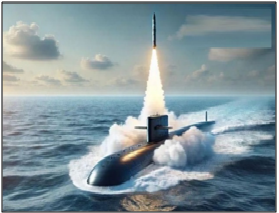
- Recently, India tested an intermediate-range ballistic missile called K-4, from the nuclear-powered submarine INS Arighaat in the Bay of Bengal.
About K-4 Missile:
- Nature: Kalam-4 or K-4 Missile, is a nuclear-capable intermediate-range submarine-launched ballistic missile (SLBM) designed mainly for deployment on Arihant-class submarines. Each Arihant-class submarine can carry four K-4 missiles.
- Development: K-4 was indigenously developed by the Defence Research and Development Organisation (DRDO).
- Structure: The 12-metre-long missile weighing 17 tonnes has a two-stage solid-fuel system.
- Range: It has a range of around 3,500 km. It is a major improvement over the older K-15 missile, which had a much shorter range of only 750 kilometers.
- Payloads: It can carry payloads, up to 2 tons, including a nuclear warhead.
- Uniqueness: One of its key features is its ability to be cold-launched from underwater, which allows the missile to be ejected from the submarine before the engine ignites.
- Accuracy: It is guided by an advanced inertial navigation system supported by GPS and India’s NavIC system. This combination ensures high accuracy, with a reported circular error probable of less than 10 metres.
- Launch Mechanism: It is a “cold-launched” missile, meaning it is ejected from the submarine using gas pressure before its engine ignites once it clears the water. The missile is also equipped with manoeuvring features that help it evade missile defence systems.
Source:
Category: Environment and Ecology
Context:
- Recently, BNHS along with the Maharashtra Forest Department, successfully carried out the tagging of 15 long-billed vultures at Melghat Tiger Reserve.
About Melghat Tiger Reserve:
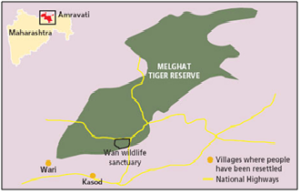
- Location: It is located in the Amaravati district of Maharashtra. It is located on the southern offshoot of the Satpura Hill Range in Central India, called Gavilgarh Hill.
- Establishment: It was established as a wildlife sanctuary in 1967 and was declared a tiger reserve in 1974.
- Nomenclature: The name ‘Melghat’ means the confluence of various ‘ghats’ or valleys, as is typical from the landscape of this tiger Reserve.
- Uniqueness: It was the first tiger reserve in Maharashtra. It was among the first nine tiger reserves notified in 1973-74 under Project Tiger.
- Vegetation: The forest is tropical dry deciduous in nature, dominated by teak.
- Rivers: The reserve is a catchment area for five major rivers: the Khandu, Khapra, Sipna, Gadga, and Dolar, all are tributaries of the river Tapti.
- Boundaries: The Tapti River and the Gawilgadh ridge of the Satpura Range form the boundaries of the reserve.
- Tribes: The Korkus are the largest tribal community in Melghat. Other communities include the Gawli community, the Gond tribe, and several other smaller tribal communities.
- Flora: Some of the common species are teak, Lagerstroemia Parviflora, Terminalia Tomentosa, Ougeinia Oojeinensis, Emblica Officinalis, Bamboo, etc.
- Fauna: Apart from Tigers the other prominent animals are Sloth Bear, Indian Gaur, Sambar deer, Leopard, Nilgais, dhole, hyena, jungle cat, langur, etc. It is also considered a stronghold of the critically endangered forest owlet.
Source:
Category: History and Culture
Context:
- Recently, Department of Posts undertook the transmission of a priceless Thanjavur painting of Shri Ram from Bengaluru to Ayodhya using its Logistics Post service.
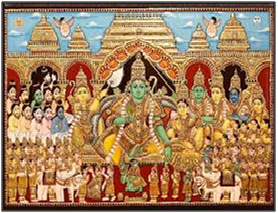
About Thanjavur Painting:
-
- Origin: This classical South Indian art form developed under the Nayakas of Thanjavur, who were feudatories of the Vijayanagara Empire.
- Zenith: It reached its peak under the Maratha rulers of Thanjavur (17th–19th centuries), particularly under the patronage of King Serfoji II (Sarfoji Maharaj).
- Influences: It reflects a blend of Vijayanagara, Maratha, Deccani, and later European (Company) styles.
- Base materials: Tanjore or Thanjavur paintings are created on wooden panels, commonly known as palagai padam. These are traditionally created on canvas affixed to wooden planks, typically made from jackfruit or teak, and bound with Arabic gum.
- Significance: It has received the Geographical Indication tag.
- Rich Colours: These paintings are known for their vibrant colours. They often use bright shades of red, blue, green, and gold leaf-work to create an opulent effect.
- Visual Style: These are characterized by vibrant colours (red, blue, green), compact compositions, and figures with rounded, cherubic faces and almond-shaped eyes.
- Theme: Tanjore paintings typically depict Hindu gods and goddesses, especially figures like Lord Krishna, Lord Ganesha, and Goddess Lakshmi.
- Technique:
-
- Gesso Work: A paste made of limestone powder and a binding agent (sukkan or makku) is used to create raised, embossed areas, giving a three-dimensional effect.
- Gold Leaf: Genuine 22-carat gold foil is layered over the gesso work.
- Embellishments: Inlays of glass beads, pearls, and precious or semi-precious stones (diamonds, rubies) are used for ornamentation.
Source:
(MAINS Focus)
(UPSC GS Paper II – International Relations: Bilateral Relations, Neighbourhood, Global Order)
Context (Introdcution)
India’s foreign policy in 2025 exposed a widening mismatch between diplomatic ambition and global constraints, as economic coercion, great-power uncertainty, and neighbourhood instability diluted outcomes despite sustained high-level engagement.
Economic and Energy Security: Growing External Vulnerabilities
- Trade Coercion and Export Stress: The U.S. imposition of a 25% reciprocal tariff on Indian goods hit labour-intensive sectors like textiles, gems and jewellery, and seafood; Commerce Ministry data show these sectors employ over 45 million workers, amplifying domestic employment risks.
- Stalled Mega Trade Deals: Despite commitments, Bilateral Trade Agreements with the U.S. and EU remained unsigned, reflecting what WTO assessments call “new-generation protectionism” driven by domestic politics in advanced economies.
- Remittance and Mobility Pressures: Restrictions on H-1B visas weakened remittance flows, which RBI data shows contribute nearly 3% of India’s GDP and act as a stabiliser of the current account.
- Russian Oil Dependence: India imported over $50 billion worth of crude oil from Russia in 2025, cushioning inflation but increasing exposure to secondary sanctions, a risk highlighted by the International Energy Agency.
- Sanctions as Economic Tools: The U.S. surcharge on Russian oil imports exemplifies what economists term “weaponised interdependence”, where trade links are used for geopolitical leverage.
- Limited Economic Diversification: FTAs with the UK, Oman and New Zealand improved market access, but together account for less than 6% of India’s total trade, limiting their macroeconomic impact.
Great Power Relations: Alignment without Assurance
- Conditional U.S. Partnership: While defence interoperability continued, India faced trade penalties, confirming RAND Corporation assessments that U.S. partnerships are increasingly transactional rather than strategic.
- Reduced Strategic Salience: The 2025 U.S. National Security Strategy mentioned India narrowly in Indo-Pacific terms, unlike the 2017 NSS that described India as a “leading global power”, signalling diminished prioritisation.
- China Engagement without De-escalation: Restoration of flights and visas with China did not translate into LAC disengagement; the Ministry of Defence confirms that over 60,000 troops remain forward-deployed.
- Persistent Security Costs: Sustained border tensions have increased India’s defence expenditure to nearly 2% of GDP, crowding out developmental spending, as flagged by the Fifteenth Finance Commission.
- Russia’s Strategic Constraints: Despite strong optics, India–Russia summits yielded limited outcomes, reflecting Moscow’s bandwidth constraints amid prolonged conflict in Ukraine, noted by SIPRI.
- Strain on Strategic Autonomy: India’s balancing act faced limits as competing powers demanded clearer alignment, narrowing traditional non-aligned space.
Global Strategic Order: Declining Norms and Rising Uncertainty
- Erosion of Rules-Based Order: Global acceptance of ceasefire proposals in Ukraine and Gaza, criticised by UN experts, suggests weakening commitment to sovereignty and accountability.
- Multilateral Paralysis: UN Security Council deadlock and WTO dispute settlement paralysis reduced faith in rule-based solutions, as highlighted in UN Secretary-General reports.
- China’s Alternative Governance Push: China’s Global Governance Initiative reflects its attempt to reshape norms, particularly in development finance and digital governance.
- Shrinking Middle-Power Space: Think tanks like Brookings note that polarisation has reduced opportunities for bridge-building diplomacy by middle powers such as India.
- India’s Normative Ambiguity: India’s calls for UN reform lack an articulated blueprint for post-Western global governance.
- Values–Interests Tension: Balancing sovereignty, democracy, and strategic interests became harder in an increasingly transactional system.
Regional and Neighbourhood Security Challenges
- Persistent Terror Threats: The Pahalgam attack reaffirmed intelligence assessments that cross-border terror infrastructure remains intact despite earlier deterrence actions.
- Limited Diplomatic Support: Post-strike responses saw sympathy but not endorsement, reflecting IISS findings that states avoid endorsing cross-border retaliation.
- Political Flux in South Asia: Transitions in Bangladesh and Nepal reduced predictability; MEA reports indicate slowed project implementation and diplomatic engagement.
- Myanmar Instability: Elections under military supervision constrained India’s democratic outreach, limiting its Act East leverage.
- External Players in South Asia: Growing defence cooperation between Pakistan and third countries diluted India’s regional influence.
- Inconsistent Neighbourhood Focus: Experts argue India’s episodic engagement contrasts with China’s sustained economic presence.
- Structural Weaknesses in India’s Diplomacy
- Over-reliance on Optics: High-visibility summits did not translate into binding outcomes, reinforcing critiques of “performative diplomacy”.
- Weak Coalition Building: India struggled to mobilise collective responses, unlike smaller middle powers that leverage issue-based coalitions.
- Credibility Deficit: International scrutiny of domestic democratic practices weakened India’s normative leverage, as noted in V-Dem and Freedom House reports.
- Reactive Policy Orientation: Foreign policy responses often followed crises rather than shaping agendas.
- Underused Economic Statecraft: Trade, technology standards, and development finance were not fully integrated into strategic diplomacy.
- Communication Gaps: Ambiguity in official narratives affected credibility during security crises.
Way Forward: Expert-Guided Strategic Recalibration
- Economic Diplomacy at the Core: NITI Aayog and OECD studies stress aligning trade, supply chains, and technology partnerships with foreign policy goals.
- Diversified Trade Architecture: WTO data shows rising protectionism; experts recommend deeper FTAs with middle powers in Africa, Latin America, and ASEAN.
- Clear Strategic Signalling: Strategic analysts advocate defining escalation thresholds and red lines to enhance deterrence credibility.
- Neighbourhood First 2.0: ORF and IDSA suggest sustained infrastructure, energy, and connectivity investments to stabilise South Asia.
- Coalition-Based Multilateralism: Brookings recommends issue-based coalitions on climate, digital public infrastructure, and development finance.
- Normative Consistency: UNDP governance assessments underline that external advocacy gains credibility only when aligned with domestic democratic practice.
Conclusion
India’s foreign policy challenges in 2025 stem less from diplomatic failure and more from structural shifts in global politics. Strategic clarity, economic statecraft, and coalition-building are essential to convert engagement into durable influence.
Mains Question
- India’s foreign policy in 2025 highlights the limits of symbolism in a transactional global order. Examine the structural challenges involved and suggest a forward-looking strategy based on expert assessments.(250 words, 15 marks)
Source: The Hindu
(UPSC GS Paper II – Government Policies and Interventions; GS Paper IV – Ethics in Sports and Public Institutions)
Context (Introduction)
India’s repeated ranking as the global leader in doping cases, even as it aspires to host mega sporting events, has exposed deep institutional, ethical and governance deficits in its sports ecosystem, demanding urgent systemic reform.
Current Status: Scale and Trends of Doping in India
- High Global Ranking in Doping Cases: According to the World Anti-Doping Agency (WADA) 2024 report, India recorded 260 adverse analytical findings (AAFs) out of 7,113 tests (3.6%), the highest globally for the third consecutive year.
- Disproportionate Positivity Rate: While India ranked only 7th globally in number of tests, its positivity rate remained far higher than sporting powers like China (24,214 tests, 91 AAFs), indicating systemic issues beyond testing volume.
- Persistent Post-COVID Trend: AAFs rose from 125 (2022) to 213 (2023), suggesting that doping is not episodic but structurally embedded.
- Recent Improvement, but Fragile: NADA claims a reduced positivity rate of 1.5% in 2025 (110 positives out of 7,068 tests), though experts caution against over-interpretation without independent audits.
- International Reputational Risk: Repeated IOC scrutiny threatens India’s credibility as a future Olympic host, especially ahead of the 2030 Commonwealth Games and 2036 Olympic bid.
- Health and Career Consequences: Medical literature cited by WADA links prolonged doping to cardiovascular, hormonal and psychological damage, making it a public health concern.
Structural and Ethical Drivers of Doping
- Incentive-Driven Sports Ecosystem: The Sports Ministry acknowledges that government jobs under sports quota and assured pensions incentivise “win-at-all-costs” behaviour, especially in lower-income athletes.
- Monetisation of Medals: High cash rewards for international medals, without commensurate ethical oversight, distort athlete motivation.
- Support-System Complicity: NADA reports confirm cases where coaches and support staff were suspended for abetting doping, pointing to institutionalised malpractice.
- Awareness Deficit: Despite initiatives like the ‘Know Your Medicine’ app, WADA’s compliance reviews highlight inadequate grassroots-level education on prohibited substances.
- Testing Avoidance Culture: Instances of athletes evading sample collection reflect weak deterrence and enforcement capacity.
- Ethical Erosion in Sports Culture: From a GS-IV lens, doping reflects compromised values of integrity, fairness, and respect for rules—core to sporting ethics.
Institutional Limitations of NADA
- Lack of Functional Independence: NADA functions under the Sports Ministry, raising concerns of conflict of interest, contrary to WADA’s emphasis on operational autonomy.
- Funding Constraints: India’s anti-doping expenditure remains modest compared to global best practices, limiting advanced testing and intelligence-led investigations.
- Capacity Gaps: Shortage of trained doping control officers and forensic expertise reduces effectiveness against evolving synthetic substances.
- Weak Deterrence Mechanisms: Delayed adjudication and limited lifetime bans dilute the punitive impact.
- Reactive, Not Preventive Approach: Current efforts are skewed towards testing rather than ecosystem-wide prevention and behavioural change.
- Compliance Pressure from IOC: Repeated observations from international bodies indicate that incremental reforms may not suffice.
Reform Measures Undertaken
- Legislative Strengthening: The National Anti-Doping (Amendment) Act, 2025 aims to align domestic law with WADA Code requirements.
- Expanded Testing Regime: NADA has increased testing coverage post-pandemic, improving detection probability.
- Awareness Campaigns: Targeted outreach programmes for athletes and coaches have been scaled up.
- Digital Interventions: Apps and online modules seek to reduce inadvertent doping.
- Staff Accountability: Action against complicit support personnel marks a shift towards ecosystem responsibility.
- Alignment with International Norms: Legal harmonisation has reduced the risk of WADA non-compliance sanctions.
Way Forward:
- Ensure Institutional Independence: Sports law experts and WADA guidelines recommend transforming NADA into a statutorily independent authority, insulated from executive control.
- Enhanced and Predictable Funding: Comparative studies show countries with lower positivity rates invest significantly more in anti-doping R&D and intelligence.
- Shift from Detection to Prevention: UNESCO’s sports integrity frameworks stress embedding ethics education from junior levels.
- Reform Incentive Structures: Experts suggest decoupling employment benefits from short-term medal outcomes and linking them to clean-sport compliance.
- Strengthen Adjudication and Penalties: Fast-track tribunals and stricter sanctions can raise deterrence.
- Technology and Intelligence Integration: Use of AI-based profiling and international data-sharing, as practised in Europe, can counter next-generation doping methods.
Conclusion
India’s doping crisis is not merely a sporting failure but an institutional and ethical one. Without an independent, well-funded NADA and incentive-aligned reforms, India’s global sporting ambitions will remain undermined by credibility deficits.
UPSC Mains Question
- India’s repeated ranking among the highest in doping violations reflects deeper governance and ethical challenges in sports administration. Examine the causes and suggest reforms to strengthen India’s anti-doping framework.(250 words, 15 marks)
Source: The Hindu