
Published on Mar 5, 2026
IASbaba's Daily Current Affairs
DAILY CURRENT AFFAIRS IAS | UPSC Prelims and Mains Exam – 5th March 2026

Archives
(PRELIMS Focus)
Dusky Eagle-Owl
Category: Environment and Ecology
Context:
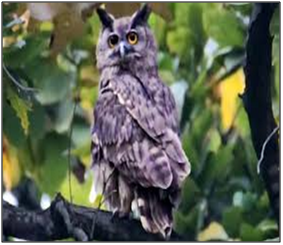
- The elusive Dusky Eagle-owl (Ketupa coromanda) has been sighted in the Phato tourism zone of Uttarakhand’s Terai West forest division after a 15-year hiatus.
About Dusky Eagle-Owl:
- Family: The Dusky Eagle-owl is a large, powerful bird of prey belonging to the family Strigidae.
-
- Nature: Unlike many other owls, it is notably partly diurnal, meaning it can be active and hunt during the day, especially in cloudy or overcast weather.
- Distribution: It is found across South and Southeast Asia, including India, Nepal, Bangladesh, and Pakistan.
- Specific Environment: It favours lowland riparian forests (forests near water bodies), plantations, and old-growth woodlands.
- Elevation: It typically resides in flat, open habitats at elevations ranging from 0 to 250 meters.
-
- IUCN Status: It is classified as Least Concern as per the IUCN Red Data List.
- Appearance: It is a large, grayish-brown owl (48–58 cm long) with striking yellow eyes.
- Physical features: It features long, prominent ear tufts (feathers used for camouflage and communication), fine barring on its underparts, and white patches on its shoulders.
- Diet pattern: It is an apex predator with a highly diverse diet. It hunts birds (crows, parakeets, herons), mammals (rats, hares, squirrels, porcupines), fish, reptiles, and insects.
- Breeding: It rarely builds its own nest, preferring to repurpose old stick nests made by kites, vultures, or eagles. A female typically lays 1 to 3 eggs.
- Vocalization: Its call consists of low, guttural notes that increase in speed and volume before trailing off.
- Significance: It is known as a litmus test species, its presence indicates a healthy, undisturbed ecosystem with a robust prey base.
Source:
Shtil Missile
Category: Defence and Security
Context:
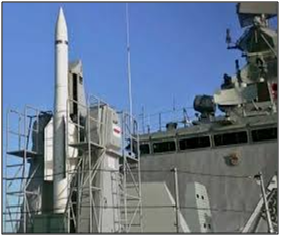
- The Ministry of Defence signed ₹5,083-crore defence contracts to strengthen India’s maritime security, including procurement of Shtil surface-to-air missile systems.
About Shtil Missile:
- Type: It is a ship-borne Vertical Launch Surface-to-Air Missile (SAM).
-
- Origin: It is developed by Russia (based on the Buk missile family).
- Range: It has an effective engagement range of 3.5 km to 50 km.
- Altitude: It can engage targets at altitudes ranging from 5 metres to 15 km.
- Guidance: It primarily uses the 9M317ME missile with semi-active radar homing (SARH).
-
- Targeting: It is capable of engaging up to 12 targets simultaneously.
- Layered Defence: It reinforces the Indian Navy’s layered air defence architecture, providing a rapid-reaction, all-weather engagement capability.
- Warship Survivability: It is specifically designed to counter high-speed anti-ship cruise missiles and supersonic fighter aircraft in contested maritime environments.
- Strategic Ties: The deal underscores the “time-tested” defence partnership between India and Russia despite ongoing global geopolitical pressures.
- Platform Integration: These missiles are integral to the weaponry of the newly commissioned INS Tushil, an upgraded Krivak III-class stealth frigate.
Source:
World Trade Organisation (WTO)
Category: International Organisations
Context:
- The WTO MSME (Micro, Small and Medium-sized Enterprises) Group recently welcomed South Africa as the 105th member participating in the initiative.
About World Trade Organisation (WTO):
- Nature: WTO is an international institution formed to regulate the rules for global trade among nations.
-
- Formation: It was formed under the Marrakesh Agreement signed on 15th April 1994 by 123 countries after the Uruguay Round negotiations (1986-94) of the General Agreement on Tariffs and Trade (GATT), leading to the birth of WTO in 1995.
- Evolution: WTO succeeded the GATT which had regulated world trade since 1948. GATT focused on trade in goods, while WTO covers trade in goods, services, and intellectual property, including creations, designs, and inventions.
- Uniqueness: It is the only global international organisation dealing with the rules of trade between nations, aiming for smooth, predictable, and free trade.
- Headquarters: Its headquarters is located in Geneva, Switzerland.
- Governance:
-
-
- Ministerial Conference: It is the highest decision-making body; meets at least every two years.
- General Council: It handles day-to-day business; also meets as the Dispute Settlement Body (DSB) and Trade Policy Review Body.
- Director-General: Currently Ngozi Okonjo-Iweala (first woman and first African to hold the post) is the Director General of WTO.
-
- Core principles of WTO:
-
-
- Most-Favoured-Nation (MFN): Treat all members equally—any trade favour granted to one must be granted to all.
- National Treatment: Imported and locally-produced goods must be treated equally once they enter the domestic market.
-
- Predictability: Commitments are “bound” to prevent arbitrary trade barrier increases.
-
-
- Special & Differential Treatment (S&DT): Developing countries receive extra time and flexibility to implement agreements.
-
- Key WTO Agreements:
-
-
- TRIMS (Trade-Related Investment Measures): Prohibits measures that discriminate against foreign products, e.g., local content requirements.
-
- TRIPS (Trade-Related Aspects of Intellectual Property Rights): TRIPS resolves disputes over intellectual property rights.
- AoA (Agreement on Agriculture): AoA promotes agricultural trade liberalization, focusing on market access and domestic support.
Source:
16th Finance Commission
Category: Polity and Governance
Context:
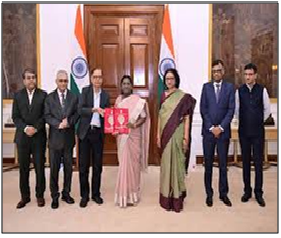
- 16th Finance Commission pushes urbanisation agenda while tightening fiscal discipline for local bodies
About 16th Finance Commission:
-
- Nature: The Finance Commission is a constitutional body established under Article 280 to define the financial relations between the Union and the States.
- Composition: It was chaired by Dr. Arvind Panagariya. The full-time members include Shri Ajay Narayan Jha, Smt. Annie George Mathew, and Dr. Niranjan Rajadhyaksha.
- Mandate: The 16th FC’s mandate was to recommend the vertical share of taxes for states and the horizontal formula to distribute those funds among them for the five-year award period starting April 1, 2026.
- Key recommendations of the 16th Finance Commission:
-
-
- Vertical Devolution: The Commission recommended retaining the States’ share of the divisible pool of central taxes at 41%, which the Union Government has officially accepted.
- Horizontal Devolution Formula: It introduced a major shift toward rewarding economic performance by adding a 10% weight for “Contribution to GDP” (replacing the previous tax effort criterion).
- Grants-in-Aid: It recommended total grants of ₹9.47 lakh crore over five years, specifically for local bodies (₹8 lakh crore) and disaster management (₹2.04 lakh crore).
- Fiscal Roadmap: It recommended the Centre reduce its fiscal deficit to 3.5% of GDP by 2030–31. It also recommended a ceiling of 3% of GSDP for state fiscal deficits and proposed a strict ban on off-budget borrowings by states.
-
- Key challenges:
-
-
- Stagnant Devolution Share: The Commission retained the states’ share of central taxes at 41%, despite several states demanding an increase to 50% to meet rising welfare and infrastructure costs.
- Cesses and Surcharges: A primary “bone of contention” is the rising use of cesses and surcharges by the Centre. These now account for nearly 20% of the Gross Tax Revenue but are not shared with states, effectively shrinking the divisible pool.
- Declining Effective Transfers: While the statutory rate is 41%, the effective transfer ratio (devolution plus grants) is projected to decline to about 32.7% in 2026–27.
- New “Contribution to GDP” Weight: Introducing a 10% weight for a state’s contribution to GDP favours industrialised, richer states (e.g., Tamil Nadu, Karnataka). This has reduced the weight of Income Distance (from 45% to 42.5%), potentially hurting poorer states like Bihar and Uttar Pradesh.
- Demographic Shifts: Southern states face a “demographic penalty” as lower population growth—resulting from successful family planning—reduces their share under population-based criteria. There are also rising costs associated with an aging population in these states.
-
- Way Forward:
-
-
- The “Grand Bargain”: A primary proposal is for states to accept the current 41% share in exchange for the Centre merging cesses and surcharges into the shareable tax base.
- Capping Levies: Implementing a statutory cap on cesses and surcharges (e.g., at 10% of Gross Tax Revenue) to ensure they remain temporary and do not permanently erode the states’ share.
- Transparency: Requiring annual disclosure of CAG-certified data on net tax proceeds to give states a clear view of the actual funds available for devolution.
- Strict Deficit Management: Enforcing a 3% GSDP fiscal deficit cap for states and a 3.5% GDP cap for the Centre by 2030–31.
-
- Eliminating Off-Budget Borrowing: Strictly discontinuing the practice of borrowing through state-owned entities to hide true debt levels.
-
- Subsidy Rationalisation: Introducing sunset clauses and clear exclusion criteria for unconditional cash transfers to ensure they target the truly needy without straining budgets.
Source:
Central Warehousing Corporation (CWC)
Category: Economy
Context:
- The Central Warehousing Corporation (CWC) celebrated its 70th Foundation Day on March 2, 2026, marking seven decades of contribution to India’s food security.
About Central Warehousing Corporation (CWC):
-
- Nature: The Central Warehousing Corporation (CWC) is a Central Public Sector Enterprise (CPSE) under the Ministry of Consumer Affairs, Food & Public Distribution.
- Objective: It serves as a premier logistics and warehousing organization supporting India’s food security, agricultural storage, and integrated supply chain management.
- Establishment: It was established in 1957 under the Warehousing Corporations Act, 1962 (later governed under Companies Act framework).
- Evolution: Its roots trace back to wartime food administration during World War II, when a separate Food Department was set up in 1942. Post-independence restructuring of the Food Ministry (1947–1958) led to the transfer of warehousing functions to the central government.
- Focus areas:
- Scientific Storage: Construction and management of warehouses and godowns for foodgrains, sugar, fertilizers, and other commodities.
- Logistics & Supply Chain Services: Inland container depots (ICDs), container freight stations (CFSs), and integrated logistics hubs.
-
-
- Support to PDS & Food Security: Assists procurement, buffer stocking, and distribution under the Public Distribution System (PDS).
-
- Custom Bonded Warehousing: Facilitates import-export trade by offering bonded storage and customs clearance support.
- Infrastructure Development: Acquisition and leasing of land for warehousing expansion across states.
- Significance: It plays a critical role in maintaining buffer stocks and ensuring smooth distribution of essential commodities nationwide. It also contributes to India’s goal of becoming a top global logistics performer by improving storage efficiency and reducing supply chain bottlenecks.
Source: