

Archives
(PRELIMS Focus)
Category: Science and Technology
Context:
- India and US recently announced that they will increase trade in technology products, including Graphics Processing Units (GPUs) and other goods used in data centers.

About Graphics Processing Units (GPU):
-
- Nature: A GPU is an electronic circuit board that can quickly perform many mathematical calculations.
- Objective: The technology was originally designed to speed up 3-D graphics rendering. It is a specialized electronic circuit designed to accelerate the creation of images, videos, and animations through parallel processing.
- Significance: GPUs are the “workhorse” of modern AI. They excel at the matrix multiplications required for training Deep Learning and Large Language Models (LLMs).
- Similarity with CPU: Like a central processing unit (CPU), a GPU is also a chip component in computing devices.
- Difference with CPU: Unlike a CPU (Central Processing Unit), which has a few cores optimized for sequential serial processing, a GPU has thousands of smaller cores designed to handle multiple tasks simultaneously.
-
- Types: Traditional GPUs come in two main flavours.
- Integrated GPUs: Built into the CPU or motherboard; shares system RAM; used for basic tasks.
-
-
- Dedicated (Discrete) GPUs: Separate chips with their own VRAM (Video RAM); used for high-performance tasks like gaming, 3D rendering, and AI.
- Working: It uses Single Instruction, Multiple Data (SIMD), allowing it to perform the same operation on many data points at once, which is essential for rendering millions of pixels or training complex AI models.
- Data processing: A GPU will also have its own RAM to store the data it is processing. This RAM is designed specifically to hold the large amounts of information coming into the GPU for highly intensive graphics use cases.
-
- Applications: It is used in areas including high-performance computing, machine learning, artificial intelligence (AI), weather forecasting, and crypto currency mining.
Source:
Category: Miscellaneous
Context:
- Rouble Nagi recently won the $1 million Global Teacher Prize at the World Governments Summit in Dubai, United Arab Emirates.

About Global Teacher Prize:
-
- Nature: It is an annual award presented to an exceptional teacher who has made a significant impact on their students and community.
- Objective: The prize aims to highlight the importance of educators and recognize the outstanding contributions they make to society.
- Recognition: It is also known as the “Nobel of Teaching” and honours an educator who has made an outstanding contribution to the profession.
- Establishment: It was instituted in 2014 by the Varkey Foundation, a global charitable organization focused on education.
- Partner: It is organized in collaboration with UNESCO and presented by GEMS Education.
-
- Award: The award comes with a cash prize of $1 million, making it one of the most prestigious recognitions in the field of education.
- Eligibility: It is open to teachers from all countries, working in various educational settings including public, private, and alternative schools.
- Evaluation: Candidates are evaluated based on their innovative teaching practices, achievements in the classroom, and efforts to improve the quality of education in their community. The selection process also considers the teacher’s impact on their students’ learning and their ability to overcome challenging environments.
- Nomination: Teachers can be nominated by others or can apply themselves.
About Rouble Nagi:
- Contribution: She established over 800 learning centres through the Rouble Nagi Art Foundation.
- Innovation: She developed “Living Walls of Learning”—transforming abandoned walls in slums into interactive educational murals to teach literacy, arithmetic, and public health.
- Impact: She has integrated over 1 million children into formal education and reduced dropout rates by over 50%.
Source:
Category: Environment and Ecology
Context:
- The Jharkhand tourism minister recently launched a jungle safari and laid the foundation for 30 eco-cottages at Dalma Wildlife Sanctuary in East Singhbhum.
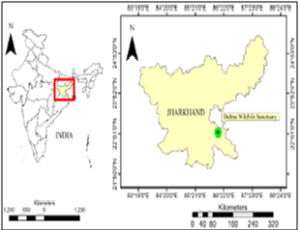
About Dalma Wildlife Sanctuary:
-
- Location: It is located near Jamshedpur, in the East Singhbhum district of Jharkhand. It is situated around the Dalma Hills on the Chottanagpur Plateau.
- Nomenclature: The Sanctuary gets its name from the “Dalma mai”, a local goddess who is revered and worshipped by the local people and the people of adjoining villages of Dalma.
- Establishment: It was inaugurated in 1975 and officially notified in 1976.
-
- Terrain: The terrain here is hilly and rocky, with dense forests and grasslands.
- Rivers: The entire forest of Dalma Sanctuary falls in the catchment of the Subarnarekha River and Dimna Lake of Jamshedpur.
- Waterfalls: It features two prominent waterfalls, Sitaguldi and Dassam.
- Temple: A temple dedicated to Lord Shiva, known as the Dalma Temple, is inside the cover.
- Elephant corridor: It is a vital link in the traditional migration route to West Bengal (Purulia district) during August–September, with herds returning by January.
- Vegetation: The forests of Dalma come under the category Dry peninsular Sal and Northern dry mixed deciduous forest. Most of the Dalma forests shed leaves in the summer and attain their full bloom at the onset of monsoon.
- Flora: Medicinal plants like Ananatmula, Satawari, Sarpgandha, etc. are abundant in the sanctuary. Various types of trees, climbers, herbs, shrubs, and orchids are found here.
- Fauna: Besides elephants, the sanctuary has a considerable population of other wildlife like barking deer, wild boar, giant squirrel, porcupine, pangolin, sloth bear, etc. Commonly seen birds in the sanctuary are falcons, golden orioles, Indian tree pies, paradise fly catchers, grey hornbills, Indian peafowl, etc.
Source:
Category: Geography
Context:
- India is engaged with China to explore the opening of an additional route for the Kailash Mansarovar Yatra, including the possibility of using the Shipki La Pass for this.
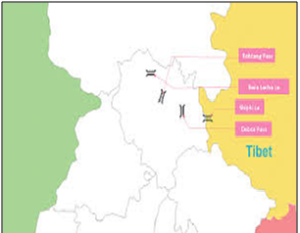
About Shipki La Pass:
- Nature: Shipki La is a high-altitude mountain pass in the Himalayas that serves as a vital strategic, geographical, and cultural link between India and Tibet.
-
- Location: It is located in the tribal district of Kinnaur in Himachal Pradesh. It is located very close to the village of Khab.
- Altitude: Situated at an altitude of 3,930 meters, it is one of the highest motorable passes.
- Boundary: It serves as the boundary post on the frontier between China and India.
- LAC status: It was declared the Line of Actual Control post-1962 war.
- Historical significance: It is an offshoot of the ancient Silk Road and has been a documented trade route since at least the 15th century.
- Other names: The old name of Shipki La was Pema La, or Shared Gate, also known as Shared Pass.
- Associated river: The Sutlej River (known as Langqen Zangbo in Tibet) enters India through this pass, flowing from the Tibet Autonomous Region.
- Significance: The pass works as the third frontier post of India for carrying out trade and commerce activities with China. The other two passes are the Lipulekh Pass in Uttaranchal and the Nathula Pass in Sikkim.
- Security: It is guarded by the Indo-Tibetan Border Police (ITBP).
Source:
Category: Defence and Security
Context:
- INS Arnalam recently marked a significant milestone in India’s transition from a “Buyer’s Navy” to a “Builder’s Navy”.
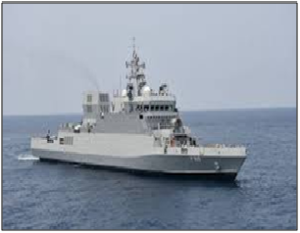
About INS Arnala:
-
- Nature: It is the first of the eight ASW SWCs (Anti-Submarine Warfare Shallow Water Craft) built for the Indian Navy.
- Nomenclature: It is named after the historic fort ‘Arnala’ located off Vasai, Maharashtra.
- Construction: It was designed and built by Garden Reach Shipbuilders and Engineers (GRSE), Kolkata.
- Commissioning: It was commissioned into the Eastern Naval Command of the Indian Navy in Visakhapatnam on 18 June 2025.
- Uniqueness: It is the Indian Navy’s first indigenously designed and built ASW SWC.
- Structure: This 77-meter-long warship, with a gross tonnage of over 1490 tonnes, is the largest Indian Naval warship to be propelled by a Diesel Engine-Waterjet combination.
- Capabilities: The ship has been designed for underwater surveillance, search & rescue operations, and Low Intensity Maritime Operations (LIMO). The ship is capable of undertaking Anti-Submarine Warfare (ASW) in coastal waters, along with advanced mine-laying capabilities.
- Advanced technologies: The vessel features homegrown systems, including stealth technology, electronic warfare capabilities, and advanced sensors, which improve combat readiness.
Source:
(MAINS Focus)
(GS Paper II — Indian Constitution: Fundamental Rights; Governance, Social Justice and Issues relating to secularism, federal structure and urban governance)
Context (Introduction)
Indian cities with mixed populations have historically experienced communal tensions, often resulting in informal or forced religious segregation.
- Laws such as the Gujarat Disturbed Areas Act, 1991, and the proposed Rajasthan Prohibition of Transfer of Immovable Property and Protection of Tenants in Disturbed Areas Bill, 2026, seek to regulate property transactions in areas notified as “disturbed”, ostensibly to preserve communal harmony. However, their evolving design and interpretation raise serious constitutional, social, and urban governance concerns.
Rationale and Original Purpose of Disturbed Areas Laws
- The Gujarat Disturbed Areas Act was enacted after repeated communal riots to prevent “distress sales” of property driven by fear, coercion, or violence.
- The law requires prior permission of the District Collector for property transfers in notified areas, with the inquiry limited to free consent and fair market value.
- The intent was corrective and temporary — addressing disturbance as an event caused by violence, not as a permanent condition of urban life.
Judicial Interpretation and Constitutional Safeguards
- The Gujarat High Court, through multiple rulings (March 2020, August 2023, October 2023, September 2025), has consistently narrowed executive discretion:
- The Collector’s role is confined strictly to verifying absence of coercion and adequacy of consideration.
- Police reports, neighbour objections, law-and-order apprehensions, or community identity are extraneous considerations.
- Neighbours have no locus standi to block a consensual property transaction.
- The Court stayed the 2020 Gujarat amendment that introduced vague concepts like “demographic equilibrium”, “improper clustering”, and “polarisation”, holding them constitutionally suspect.
- Despite statutory language declaring Collector decisions “final”, judicial review under Article 226 remains available to protect fundamental rights.
Concerns with the Proposed Rajasthan Legislation
- The Rajasthan Bill adopts language similar to the stayed Gujarat amendment, explicitly invoking:
- “Demographic imbalance”
- “Improper clustering”
- Population composition as a source of disturbance
- This marks a conceptual shift:
- From disturbance as a result of violence → disturbance as a function of presence.
- From regulating acts → evaluating identity and character.
- Disturbance is redefined as a permanent condition, rather than an episodic breakdown of public order.
Implications for Fundamental Rights and Urban Citizenship
- Article 19(1)(e) (right to reside and settle anywhere) is affected when property transactions are curtailed based on identity-linked assumptions.
- Article 15 concerns arise if restrictions operate disproportionately against specific religious communities.
- Article 14 is implicated when executive discretion rests on vague, subjective notions like demographic equilibrium, lacking rational nexus with public order.
- Urban segregation is treated as a cause of disturbance, whereas sociologically it often emerges as a consequenceof past violence, fear, and exclusion.
Governance Contradictions
- The laws sit uneasily with decades of policy aimed at creating transparent, efficient land markets through digitisation and ease of transactions.
- Subjecting property markets to political and demographic logic undermines both economic development and social trust.
- Instead of addressing the root causes of segregation — insecurity, exclusion, and historical violence — the legal framework risks entrenching segregation through administrative control.
Way Forward
- Preserve the limited scope doctrine evolved by the Gujarat High Court: free consent and fair value as the sole tests.
- Avoid permanent notification of “disturbed” areas based on demographic criteria.
- Treat disturbance as an event requiring restoration, not as an inherent feature of community presence.
- Uphold constitutional guarantees of equality, mobility, and private contract, with judicial oversight as the final safeguard.
Mains Question
- The urban governance is not only about infrastructure and growth but equally important is equity and social justice. Discuss with reference to proposed Rajasthan Prohibition of Transfer of Immovable Property and Protection of Tenants in Disturbed Areas Bill, 2026. (250 words)
Source: The Indian Express
(GS Paper III — Indian Economy and issues relating to planning, mobilisation of resources, growth, development and employment; Inclusive growth and issues arising from it; Industrial policy)
Context (Introduction)
India’s textile sector occupies a unique position in the economy — combining large-scale manufacturing, export potential, and deep integration with rural livelihoods and traditional crafts. Budget 2026 marks a significant policy moment by treating textiles not merely as a labour-intensive industry, but as a strategic sector central to employment, exports, and cultural economy. The Budget signals a shift from fragmented interventions towards a more integrated textile policy framework.
What Budget 2026 Gets Right ?
- Integrated Policy Architecture: Budget 2026 introduces a coordinated set of initiatives — the National Fibre Scheme, Textile Expansion and Employment Scheme, National Handloom and Handicraft Programme, Text-ECON, and Samarth 2.0 — linking raw materials, production, skills, crafts and exports into a single policy imagination.
- Recognition of Craft and Rural Livelihoods: The Mahatma Gandhi Gram Swaraj Initiative strengthens khadi, handloom and handicrafts through market access, branding and training, acknowledging that India’s textile strength lies equally in its decentralised craft ecosystems that sustain millions of rural households.
- Infrastructure and Scale through Mega Textile Parks: New textile parks proposed in “challenge mode”, building on the MITRA model, aim to reduce logistics costs, enable value addition and promote technical textiles, a high-growth segment with global demand.
- Investor Confidence and Export Orientation: Positive equity market response reflects confidence in textiles as a growth sector, reinforced by the Budget’s emphasis on scale, cluster development and export competitiveness.
What the Budget Misses ?
- Limited Focus on Value Creation and Brand Ownership: While production and infrastructure receive strong attention, the Budget is largely silent on design leadership, branding, trend intelligence and creative authorship, which drive high margins in the global fashion economy. India remains positioned as a low-margin supplier rather than a value-setting player.
- Narrow Conception of Skills: Samarth 2.0 focuses on operational skilling, but underplays creative, managerial and systems-level capabilities required to translate production strength into global fashion leadership, especially in a digital and sustainability-driven market.
- Artisan Vulnerability Despite Inclusion Rhetoric: Although artisan inclusion is emphasised, structural issues persist — fragmented supply chains, weak pricing power and income insecurity. Without assured procurement, quality certification and transparent pricing, artisans remain exposed even as output expands.
- External Trade Pressures Underplayed: While emerging trade agreements (e.g., with the EU) offer opportunities, the Budget does not sufficiently address competitive pressures from Bangladesh and Vietnam, or the rising importance of sustainability compliance and standards in export markets.
The Larger Policy Challenge
Budget 2026 reflects a transition from scheme-based intervention to ecosystem thinking, but it remains more comfortable with expanding production than with capturing value. Textiles and fashion are not only industrial outputs; they are cultural products shaped by creativity, identity and design. Without integrating these dimensions, India risks reinforcing a volume-driven, low-margin growth path.
Conclusion
Budget 2026 marks a turning point, not a culmination, in India’s textile policy. It lays strong foundations in fibre security, infrastructure, employment and craft support. However, to become globally competitive in a durable sense, future policy must move from making more to valuing better — by empowering designers, strengthening artisan pricing power, and enabling brand-led export strategies. Only then can India’s textile economy achieve global stature measured not just in scale, but in value and dignity.
Mains Question
- What is the status of textile sector in India? Discuss the programs and schemes implemented by the government to boost the sector. (250 words)
Source: The Indian Express