

Archives
(PRELIMS Focus)
Category: Polity and Governance
Context:
- The Sports Authority of India (SAI) has launched a four-day Sports Sciences Workshop for combat sports coaches at its Sports Science Division in New Delhi.

About Sports Authority of India (SAI):
- Nature: It is a registered society fully funded by the Government of India.
- Nodal ministry: It is the apex national sports body of India, established by the Ministry of Youth Affairs and Sports, Government of India.
- Establishment: It was set up in 1984 to carry forward the legacy of the IXth Asian Games held in New Delhi in 1982 under the Department of Sports.
- Objective: SAl has been entrusted with the twin objectives of promoting sports and achieving sporting excellence at the national and international level.
- Focus areas: SAI’s primary efforts include widespread talent scouting and training of selected individuals by providing vital inputs like coaching, infrastructure, equipment support, sports kits, competitive exposure, etc.
- Significance: SAI has played a significant role in shaping India’s sports development by providing training to elite athletes and at the same time operating a number of schemes for the identification and development of young talent.
- Implementation of schemes: SAI implements the following Sports Promotional Schemes across the country to identify talented sportspersons in various age groups and nurture them to excel at the national and international levels:
- National Centres of Excellence (NCOE)
- SAI Training Centre (STC)
- Extension Centre of STC
- National Sports Talent Contest (NSTC)
- Other responsibilities: SAI is also entrusted with the responsibility of maintaining and utilizing, on behalf of the Ministry of Youth Affairs & Sports, the following stadiums in Delhi, which were constructed/renovated for the IXth Asian Games.
- Jawaharlal Nehru Sports Stadium
- Indira Gandhi Sports Complex
- Major Dhyan Chand National Stadium
- Dr. Syama Prasad Mookherjee Swimming Pool Complex
- Dr. Karni Singh Shooting Ranges.
Source:
Category: Science and Technology
Context:
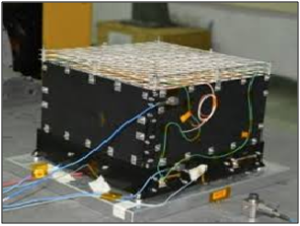
- ISRO used the first homegrown cosmic dust detector, the Dust EXperiment, to confirm that a cosmic dust particle hits Earth’s atmosphere approx. every thousand seconds.
About Dust EXperiment (DEX):
- Nature: It is the first Indian-made instrument to hunt for these high speed Interplanetary Dust Particles (IDPs).
- Development: It is developed by the Physical Research Laboratory, Ahmedabad.
- Associated mission: It was flown on PSLV Orbital Experimental Module (POEM) of the PSLV-C58 XPoSat Mission on January 1, 2024.
- Uniqueness: It is the first-of-its-kind instrument designed to detect such high-transient particles. It is a blueprint of the detector which can study the cosmic dust particle at any planet having an atmosphere or no atmosphere.
- Mechanism: It is a compact instrument tuned to hear impacts, capturing vital data. At the core of the experiment lies a 3-kilogram dust detector based on the cutting-edge hypervelocity principle designed to capture high-speed space dust impacts with only 4.5 W power consumption.
- Positioning: It rocketed to an altitude of 350Km.
- Significance: Its data redefines our understanding of the universe and charts the path for safe human deep-space missions. Understanding and collecting data on interplanetary dust in Earth’s atmosphere will also be valuable for planning Gaganyaan missions.
- About Interplanetary Dust Particles (IDPs):
-
-
- Interplanetary dust refers to micrometer-scale particles originating from the solar system.
- These are microscopic shrapnel from comets and asteroids that form our atmosphere’s mysterious “meteor layer”, and show up as “shooting stars” at night.
-
- These can be analyzed to gain insights into their origins, formation mechanisms, and the processes that occurred in early solar and presolar environments.
Source:
Category: Environment and Ecology
Context:
- The first phase of the All-India Tiger Estimation-2026 (AITE-26) commenced in the Thanthai Periyar Wildlife Sanctuary under the Erode Forest Division recently.

About Thanthai Periyar Wildlife Sanctuary:
-
- Location: It is located in the Bargur Hills of the Erode district in Tamil Nadu, at the junction of the Eastern Ghats and the Western Ghats.
- Status: It was notified by the Tamil Nadu government on January 30, 2024, it became the state’s 18th wildlife sanctuary. It is also one of the tiger corridors identified by the National Tiger Conservation Authority.
- Area: The sanctuary covers an area of 80,114.80 hectares (approximately 801 sq km).
- Tiger corridor: It is a vital tiger corridor identified by the National Tiger Conservation Authority (NTCA), linking the Sathyamangalam Tiger Reserve and the Male Mahadeshwara Hills Tiger Reserve.
- Connectivity: The region is part of the Nilgiris Elephant Reserve and provides a crucial habitat for large herbivores, including elephants and the Indian Gaur. It connects the Nilgiris Biosphere Reserve with the Cauvery South Wildlife Sanctuary, facilitating the safe movement of wildlife.
- River: The sanctuary is the catchment area for the Palar River, which flows into the Cauvery River and supports agricultural activities in the region.
- Biodiversity: The diverse landscape, including hills, valleys, forests, and grasslands, is home to a rich variety of flora and fauna, including tigers, leopards, sloth bears, and various bird species.
Source:
Category: Geography
Context:
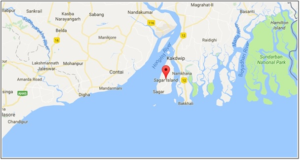
- West Bengal Chief Minister Mamata Banerjee recently laid the foundation stone of a 5-km-long bridge over the river Muriganga to connect Sagar Island with the mainland.
About Sagar Island:
- Location: Sagar Island is located in the Ganges delta, in West Bengal. It is about 100 km south of Kolkata. It is part of the South 24 Parganas district.
- Other names: It is also known as Gangasagar or Sagardwip.
- Associated river: It lies at the mouth of the Hooghly River (a major distributary of the Ganges), an arm of which separates it from the mainland to the east.
- Uniqueness: Although Sagar Island is a part of Sundarbans, it does not have any tiger habitation or mangrove forests or small river tributaries as is characteristic of the overall Sundarban delta.
- Cultural site: Situated at a point where the Ganges River system meets the Bay of Bengal, the island is held to be particularly sacred and is a noted Hindu pilgrimage center. Thousands of pilgrims make their way to Sagardwip every year in mid-January to take a holy dip in the river during the Ganga Sagar Fair.
- Religious significance: The Ganga Sagar Fair is the second most attended fair in the world, after the popular Kumbh Mela. The Kapil Muni temple on the island is a popular pilgrim centre.
- Concerns: The island is highly vulnerable to coastal erosion and rising sea levels, which threaten its infrastructure and historic sites.
- Environmental Protection: Following National Green Tribunal (NGT) directives, recent measures include Casuarina shelter belt plantations and mangrove conservation to mitigate saline ingress and shoreline erosion.
Source:
Category: Government Schemes
Context:
- At the 79th Foundation Day of the Bureau of Indian Standards (BIS), the Union Minister for Consumer Affairs recently launched the SHINE Scheme in New Delhi.
About SHINE Scheme:
- Full Name: Standards Help Inform & Nurture Empowered Women.
-
- Objective: It aims to empower women with knowledge of safety, quality standards, and consumer protection. It positions women as “quality ambassadors” to ensure the safety of products in households and communities.
- Implementation: It is conducted through partnerships with Self-Help Groups (SHGs) and NGOs via structured training and grassroots literacy programs.
- Nodal ministry: It is a flagship women-centric initiative by the Bureau of Indian Standards (BIS) under the Ministry of Consumer Affairs.
- Significance:
-
- Women-centric governance: Aligns with women-led development and grassroots empowerment
- Consumer safety: Reduces risks from substandard products at the household level
- Inclusive quality infrastructure: Extends standardisation beyond industries to communities
- Economic empowerment: Strengthens women-led enterprises through quality compliance
- Behavioural change: Builds long-term quality consciousness within society
About Bureau of Indian Standards:
- Nature: It is the National Standard Body of India established under the BIS Act 2016.
-
- Objective: It was established for the harmonious development of the activities of standardization, marking, and quality certification of goods and for matters connected therewith or incidental thereto.
- Legacy: It is the successor of the Indian Standards Institution (ISI), which was created in 1947 to ensure quality control and competitive efficiency in the rapid industrialization era.
- Significance: It represents India in International Organization for Standardization (ISO) and International Electrotechnical Commission (IEC).
- Nodal Ministry: It is functioning under the administrative control of the Ministry of Consumer Affairs, Food and Public Distribution.
- Headquarters: Its headquarters is located in New Delhi and maintains regional and branch offices throughout the country.
Source:
(MAINS Focus)
GS-II: Indian Constitution—features, significant provisions and basic structure; Structure, organisation and functioning of the Executive and the Judiciary.
GS-III: Environmental pollution and degradation; conservation, environmental impact assessment.
Context (Introduction)
Over the past decade, the Supreme Court of India has increasingly shifted from judicial review of environmental decisions to issuing forward-looking, managerial directions. This transformation often triggered by regulatory failure has seen the Court step into the shoes of administrators. While motivated by environmental protection, this approach has generated uncertainty, inconsistency, and governance challenges.
Core Idea
The Court’s evolving role reflects a tension between its constitutional duty to protect the environment and the limits of judicial competence in policy implementation. By substituting regulators instead of disciplining them to act within statutory frameworks, the Court risks undermining regulatory stability, predictability, and democratic accountability.
Judicial Overreach and Governance Gaps
- Shifting and reversible directions: Blanket rulings such as uniform Eco-Sensitive Zones (ESZs), diesel vehicle bans, and firecracker restrictions have frequently been modified or diluted, creating policy uncertainty.
- From legality to consequence-based reasoning: The Court has at times prioritised immediate outcomes over doctrinal consistency, as seen in reversals on ex post facto environmental clearances.
- Expertise dilemma: Reliance on committees and expert inputs has been uneven, with expert conclusions sometimes adopted, contested, or abandoned within weeks.
- Continuing mandamus problem: Serial interim orders, affidavits, and modifications blur the line between adjudication and administration.
- Chilling effect on participation: Early judicial entry into approval processes discourages later public challenge and narrows the evidentiary space.
Why It Matters
- Rule of law and separation of powers: Judicial governance, if unpredictable, weakens institutional clarity and accountability.
- Environmental outcomes: Regulatory uncertainty can be as damaging as regulatory laxity, delaying effective environmental protection.
- Federal and administrative strain: States and regulators face parallel decision-making pressures—statutory compliance on one side and judicial negotiation on the other.
- Public trust: Inconsistent standards erode confidence in both environmental regulation and judicial neutrality.
Way Forward: Towards Stable Green Adjudication
- Re-centre the Court’s role on reviewing legality and procedure, not managing outcomes
- Use judicial power to discipline regulators back into action, with time-bound, reasoned directions
- Specify clear thresholds for when managerial intervention is justified
- Avoid sweeping, one-size-fits-all rules that invite exemptions and reversals
- Preserve space for public participation and contestation across regulatory fora
Conclusion
The Supreme Court’s environmental activism has filled critical governance vacuums, but its increasing managerial role has also produced uncertainty and instability. Sustainable environmental protection requires not continuous judicial governance, but strong, accountable regulators operating within clear legal frameworks. A steadier judicial hand protective yet
Mains Question
- In recent years, the Supreme Court has increasingly issued forward-looking and managerial directions in environmental matters to compensate for regulatory failures. Critically examine how such judicial “green governance” impacts the principles of separation of powers, regulatory certainty, and effective environmental protection in India. (250 words, 15 marks)

GS-II: Functions and responsibilities of the Union and the States; issues and challenges pertaining to the federal structure; devolution of powers and finances up to local levels and challenges therein.
Context (Introduction)
Centre–State fiscal transfers in India are determined primarily through Finance Commission (FC) recommendations, which decide both the vertical devolution and the horizontal distribution among States. In recent years, these transfers have become contentious due to GST-related revenue changes, rising cesses and surcharges, and perceptions among high-performing States that their tax contributions are not adequately reflected in devolution outcomes.
Core Idea
State’s share in Gross State Domestic Product (GSDP) can serve as a meaningful proxy for the accrual of central taxes at the State level. Since direct tax collections are recorded at the place of registration rather than the place of income generation, GSDP better reflects underlying economic activity and contribution to national income than raw tax collection figures.
Limitations of the Existing Devolution Framework
- Mismatch between tax collection and economic activity: Direct taxes are attributed to the location of registered offices, disadvantaging manufacturing and labour-exporting States.
- GST distortions: Destination-based GST captures consumption, not production, weakening its use as a contribution metric.
- Erosion of fiscal autonomy: Rising reliance on cesses and surcharges reduces the divisible pool shared with States.
- Equity–efficiency tension: Heavy reliance on income distance prioritises redistribution but undervalues contribution by high-GSDP States.
- Perception of unfairness: States like Maharashtra, Karnataka and Tamil Nadu contribute a higher share of national output but receive lower shares of transfers.
Why GSDP Matters
- Better proxy for tax accrual: Empirical evidence shows a strong correlation between States’ GSDP shares and central tax accruals, stronger than with devolution outcomes.
- Balancing equity and efficiency: GSDP captures contribution, while other criteria can continue to address regional disparities.
- Fiscal federal trust: Recognising economic contribution enhances the credibility and acceptability of the transfer system.
- Cooperative federalism: A formula that reflects both capacity and need reduces inter-State friction and strengthens Centre–State relations.
Way Forward
-
- Increase the weight of GSDP share as a criterion in horizontal devolution while retaining redistributive variables
- Improve inter-State data on production, migration, and multi-location enterprises
- Rationalise cesses and surcharges to restore the size of the divisible pool
- Ensure transparency in FC methodology to build consensus across States
Conclusion
India’s fiscal federalism must evolve from a narrow redistribution framework to one that also acknowledges economic contribution. Incorporating GSDP more prominently in devolution formulas can strike a pragmatic balance between equity and efficiency, strengthen cooperative federalism, and enhance the legitimacy of Centre–State fiscal transfers in a post-GST era.
Mains Question
- In the post-GST era, Centre–State fiscal relations are increasingly marked by tensions between equity-based redistribution and recognition of States’ economic contribution. Critically examine the case for using Gross State Domestic Product (GSDP) share as a criterion in horizontal devolution of central taxes, highlighting its implications for fiscal federalism and cooperative governance. (250 words, 15 marks)
